

More
U.S. WOMEN'S AMATEUR FOUR-BALL
USGA Staffers Shepard, White Making History at 2026 WAFB

USGA Staffers Shepard, White Making History at 2026 WAFB
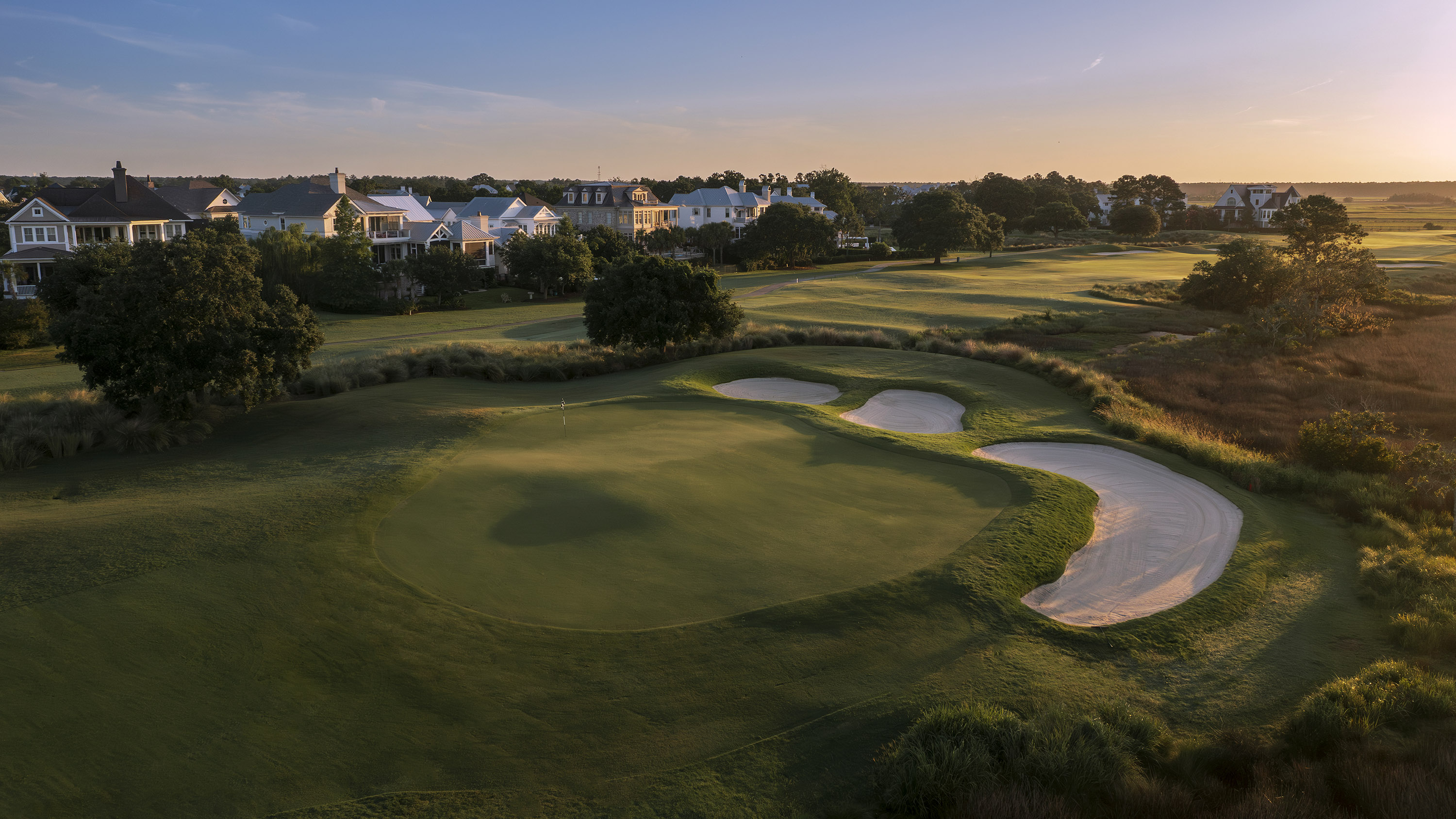
Conducting the 11th U.S. Women’s Amateur Four-Ball Championship requires a number of USGA staff to be on-site at Daniel Island Club, in Charleston, S.C. To ensure a first-class experience for the 64 sides (128 competitors) hoping to claim a national championship, folks from Rules and Competitions, the Green Section (agronomy), scoring and communications/content play integral roles.
But this year’s stellar field – consisting mostly of teens and collegians under the age of 23 – also has a USGA slant. In fact, Colleen Shepard (Green Section) and Alisa White (U.S. Open operations) will become the first current set of USGA staffers to actually compete in the championship.
Neither are strangers to qualifying for USGA championships, as this will be Shepard’s sixth and White’s fifth.
“We are excited to have two USGA staff members competing in the U.S. Women's Amateur Four-Ball Championship for the very first time,” said Sarah Dusman, the director of the championship. “As their colleague, I know how impressive of an achievement this is just given the demand of their roles within the industry and their limited time to practice and play. We look forward to cheering them on and seeing how they perform.”
The two first met at a U.S. Women’s Mid-Amateur qualifier two years ago at the Country Club of Lexington (S.C.), where they realized that both worked for the same organization. Following the championship – where Shepard and White shared a practice round at Brae Burn Country Club outside of Boston – Shepard was urged by 2002 U.S. Women’s Mid-Amateur champion Kathy Hartwiger, the wife of longtime USGA Green Section agronomist Chris Hartwiger, to ask White about teaming up for the U.S. Women’s Amateur Four-Ball.
Fortunately, U.S. Women’s Amateur Four-Ball qualifying commences in the late summer/fall when work for both North Carolina residents tends to “slow down,” and the Dec. 11 site – the last of the 29 qualifiers – at The Wildwoode Club, in Columbia, S.C., fit into their crazy schedules.
There’s a common misconception from the outside world that USGA employees, by the nature of the job, have the opportunity to play more golf.
It’s actually the opposite.
For Shepard, 37, of Charlotte, and the 34-year-old White, a native Texan who now resides in Southern Pines, getting in a round or simply hitting range balls requires meticulous management.
“It’s tricky,” said White, who recently transitioned from the U.S. Women’s Open operations team to the U.S. Open, where she oversees hospitality tents for USGA corporate partners, among other duties. “For example, at one [recent] U.S. Women’s Open, I was on site for more than three months. Working 10-12 hours [a day], you don’t really have time. And when you leave the golf course, the last thing you want to see is another golf course. Being in golf shape is not great for our ‘busy’ season.
“The fact that Colleen and I could play a December qualifier [for the U.S. Women’s Amateur Four-Ball] I would say was beneficial.”
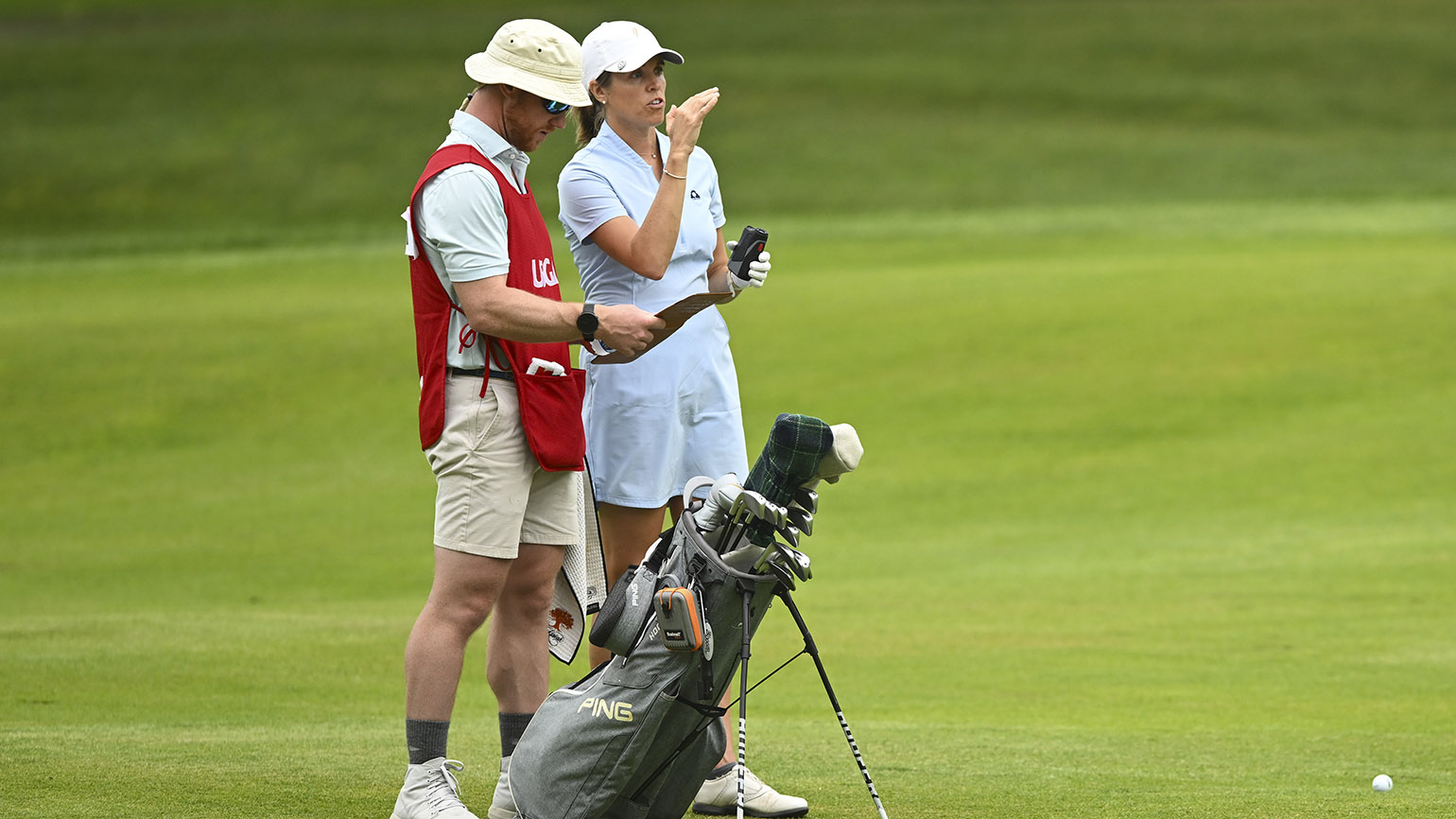
A crazy winter where it snowed multiple times in the Carolinas only added to the challenge for Shepard and White, who struggle to find practice time as it is. As someone who handles sales of Green Section products such as the DEACON® digital management system, the GS3 Ball (which helps superintendents better manage the speeds, smoothness and firmness of greens) and the USGA Moisture Meter, Shepard was “lucky” to play 5-6 rounds since the Dec. 11 qualifier. Spring tends to be the busiest time for the Green Section sales team, as many course superintendents and directors of agronomy begin their planning for the upcoming season.
White flew to Long Island for a site visit to Shinnecock Hills Golf Club in late March. When asked if clubs were in tow, she quickly answered, “No.” This was a business trip for the 126th U.S. Open.
Like their fellow mid-amateurs (25 and older), golf takes a backseat to life – i.e. work and family.
“Not a whole lot of golf,” said Shepard, who plays primarily at the nine-hole Dr. Charles L. Sifford Golf Course, in Charlotte, a venue named for one of the game’s pioneer Black golfers.
Shepard came to the USGA 2½ years ago from the Intown Golf Club, a startup social golf club located in Charlotte. She previously worked for GolfNow, a tee-time booking service arm of Golf Channel and Club Car after playing four seasons at East Carolina University. A native of Cary, N.C., she was both a soccer and golf standout at Green Hope High, the same school that produced 2018 U.S. Mid-Amateur champion Kevin O’Connell (the two both graduated in 2007). Shepard (née Estes) actually had scholarship offers for both soccer and golf, ultimately opting for the latter after receiving interest from not only ECU, but also North Carolina-Wilmington and the University of Richmond.
Professional golf, however, was never a major goal. Shepard, the women's winner of the 2013 Charleston City Championship, chose to get into the golf industry instead, and when the Green Section position opened in 2023, she jumped at the opportunity. A year later, she was married at Pinehurst Resort to Hugh Shepard, the owner of a small manufacturing company in Charlotte. The two met at a Halloween party in 2019, and he proposed to her on the driving range at Charles L. Sifford G.C. While not an avid golfer, Hugh has served as Colleen’s caddie at the 2024 and 2025 U.S. Women’s Mid-Amateurs and will be on the bag at Daniel Island.
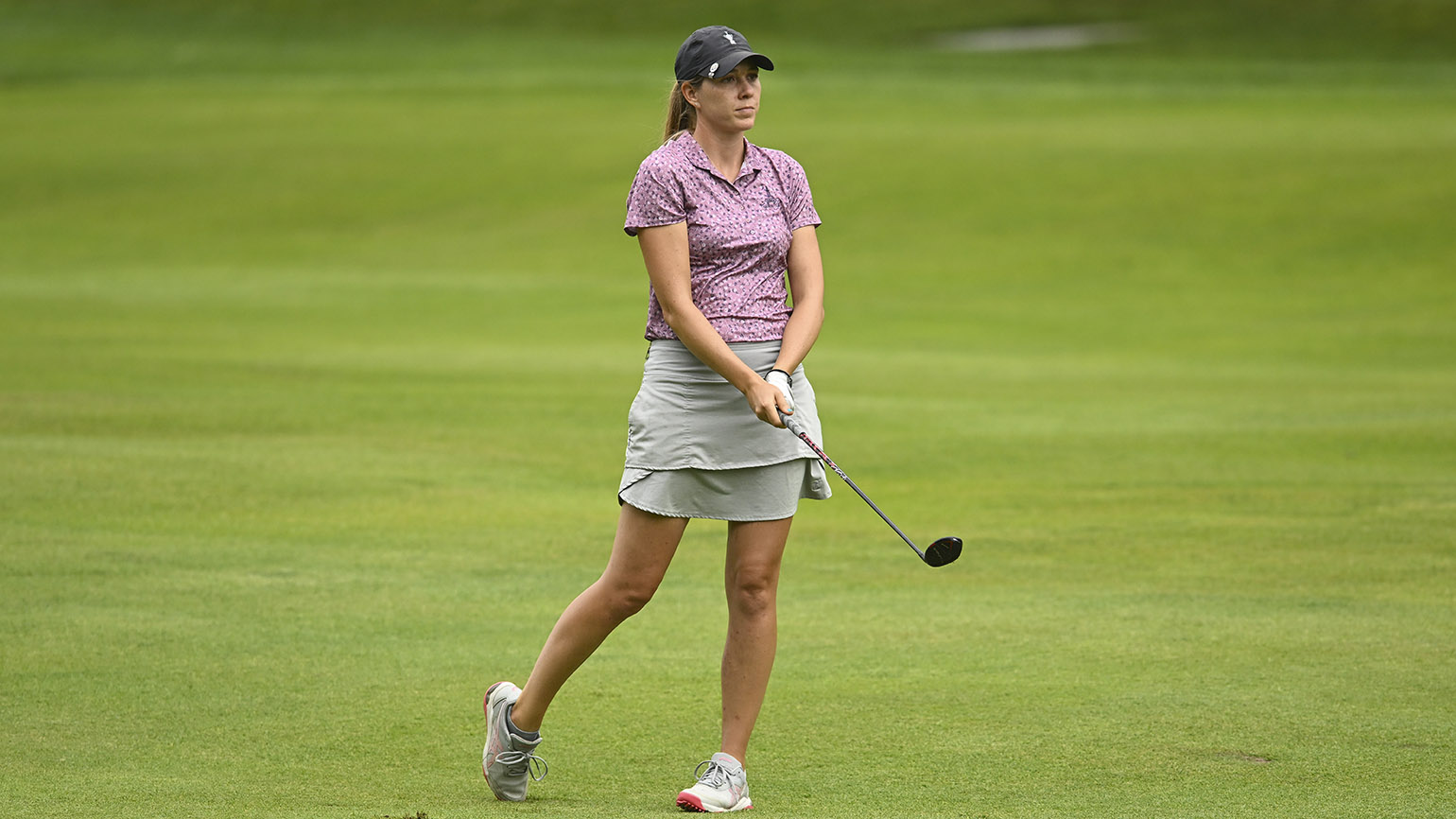
White, who was a competitive swimmer until suffering a shoulder injury in high school, was literally born into the game. Her father, Ted, is a club professional at the John Pitman Municipal Golf Course, in Hereford, Texas, and her grandfather played for the University of Texas. But golf didn’t come naturally to White, slowly developing her skills after the swim injury to play at Division II West Texas A&M, where she posted two victories. She played her final two seasons at Division I Sam Houston State, where she captured one tournament title and was named the 2013-14 Southland Conference’s Newcomer of the Year.
But like Shepard, White didn’t have any grandiose plans to play professionally. Slightly burnt out from four years of collegiate competition, she wasn’t sure where her career was going after finishing graduate school at Sam Houston in 2016. Being a course general manager didn’t excite her. She also thought about journalism until she landed an internship with the USGA operations team in 2016.
A passion was born. Two years later while working the U.S. Women’s Open at Shoal Creek Club, in suburban Birmingham, Ala., she met her future husband, Sean Kerrigan, then an intern with the USGA, who is now an assistant director with the U.S. Women’s Open operations team.
Playing competitive golf, however, never died, despite the lack of time. She qualified for the 2021 U.S. Women’s Mid-Amateur, losing in the Round of 64 to Amanda Jacobs, and again in 2024.
It was at the Country Club of Lexington where White found herself talking with fellow qualifier Shepard.
“Colleen goes, ‘I work for the USGA,’ and I was like, ‘Wait, I work for the USGA,’” said White recalling the encounter. “That’s how we met.”
Added Shepard: “Everybody [at the USGA] has their silos and [is] so focused on [their job], and you don’t see everybody all the time. It was really a fun thing. Then we actually got paired together at Brae Burn.”
A friendship, and eventually a Four-Ball partnership, was formed.
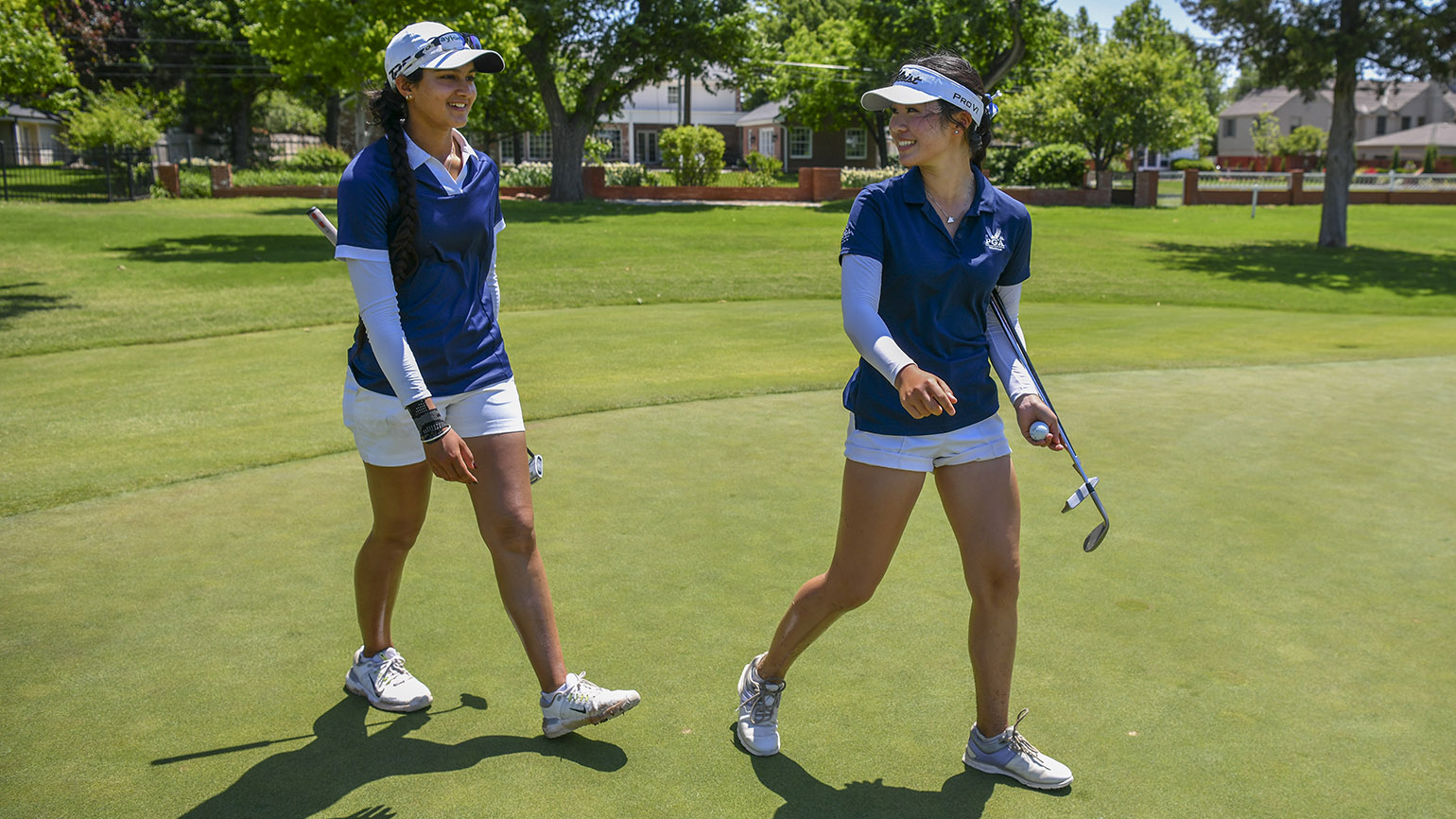
At the qualifier, Shepard and White “ham-and-egged” well, producing a total of seven birdies against just two “counting” bogeys. Competing alongside a side featuring a 12- and 13-year-old that could have been either player’s kids, the duo posted a 4-under-par 68, good enough to share second and garner one of the three available spots. The field that day was so young that someone asked the two if their kids were playing.
Shepard and White will be one of five mid-amateur sides – and one of the oldest – at Daniel Island Club. Only the senior duo of Ellen Port and Lara Tennant (combined 10 USGA titles) and 2018 U.S. Women’s Mid-Am champion Shannon Johnson (43) and partner Megan Buck (37) are older.
“My expectations were to just be competitive and have a fun time,” said White of her thoughts going into the qualifier. “I was probably more surprised for us being mid-ams. It was a fun surprise for me.
“I didn’t even tell all of [my co-workers] that I was playing. I didn’t want that pressure if things didn’t work out. But they all found out and kept track. It was cool to see their support and excitement.”
To prepare for the championship, White and Shepard finished second overall (low gross) in the Pinehurst Women’s Member-Member event held the weekend of the Masters Tournament. Shepard’s parents are longtime members, so even though she lives just under two hours away, she’ll occasionally play one of the resort’s 10 courses when visiting the USGA’s auxiliary headquarters in the Sandhills.
While the length was considerably shorter than what they’ll face at Daniel Island, it was an opportunity to work off any competitive rust as well as reacquaint themselves with the four-ball format.
And Shepard brought along the side’s secret weapon – or should we say weapons – that they hope will carry them to match play at Daniel Island Club.
Date energy balls and protein-infused banana-walnut-peanut butter cookies. Both are made from scratch.
“I hit the kitchen beforehand,” said Shepard.
“Our secret weapon,” added White.
Perhaps the on-course snack will help Shepard finally make a match-play cut, which dates to the 2009 U.S. Women’s Amateur Public Links. White, whose first USGA experience was the 2011 U.S. Women’s Amateur where she played a practice round with eventual winner and defending champion Danielle Kang, is 1-for-4.
But no matter what transpires at Daniel Island, both will have a large rooting section at the Liberty Corner, N.J., and Pinehurst offices.
“Chris Neff, our [Southeast] regional agronomist who will be on site, has been poking at me, saying he is going to have the course playing firm and fast,” said Shepard. “Everyone has been very supportive. My boss, Jeff [Kinney], is an avid golfer. He’s always keeping tabs.
“I want to do this for Alisa and I, but also for the USGA. It’s really cool to represent the USGA.”
David Shefter is a senior staff writer at the USGA. Email him at dshefter@usga.org.
© 2026 United States Golf Association. All Rights Reserved.