
More
U.S. WOMEN'S AMATEUR
Bailey’s Comet: USC Star Returns Better Than Ever From ‘Scary’ Nerve Issue

Bailey’s Comet: USC Star Returns Better Than Ever From ‘Scary’ Nerve Issue
There are three words that any athlete never wants to hear from medical experts: Career Ending Injury. This especially rang true for then-19-year-old University of Southern California sophomore Bailey Shoemaker in March of 2025.
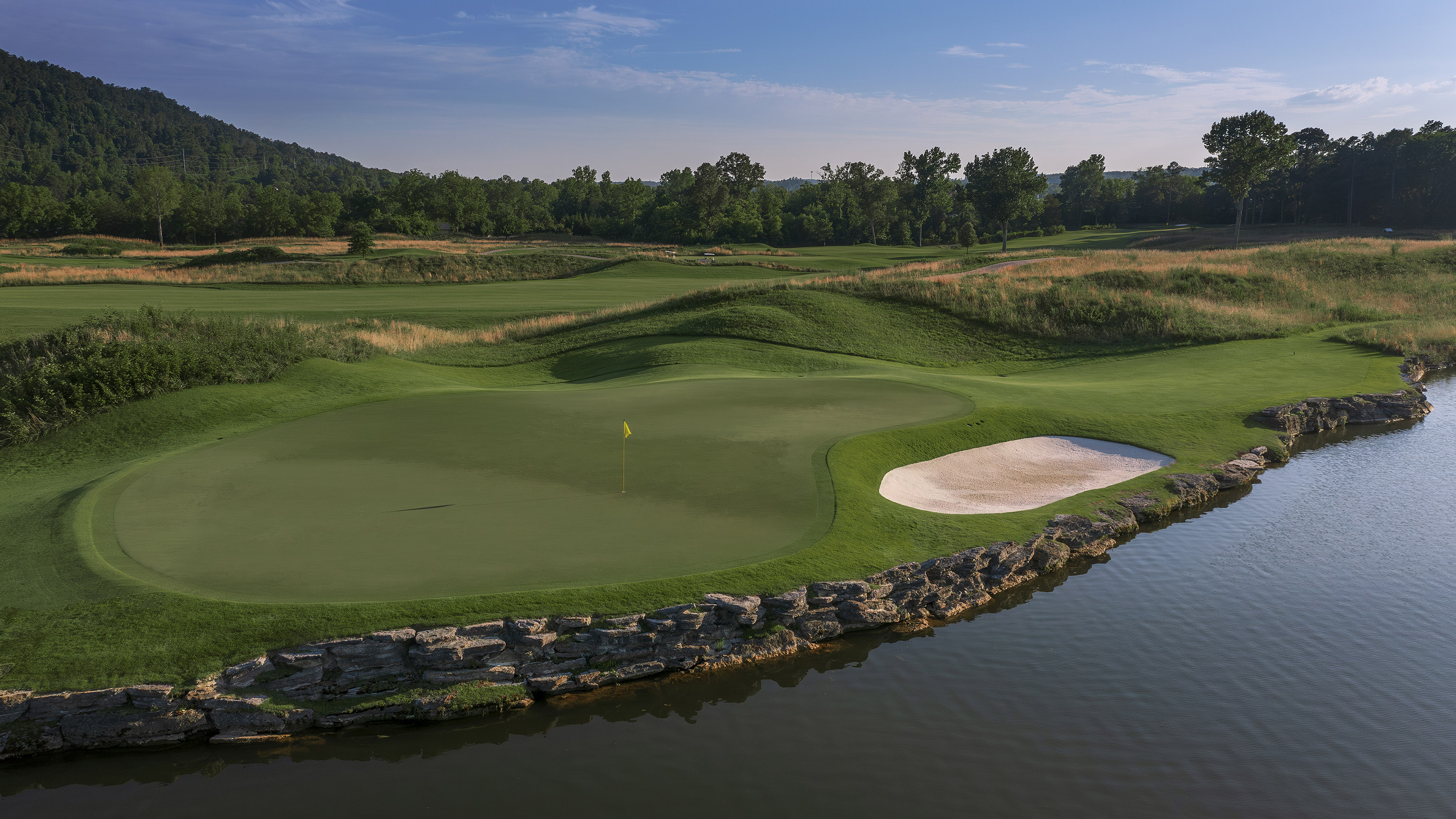
Thankfully, that diagnosis never came to fruition for the 126th U.S. Women’s Amateur qualifier who will compete this week at The Honors Course, in Ooltewah, Tenn.
But 17 months ago, when the talented collegian hit a 3-wood on the second hole of the Charles Schwab Women’s Collegiate at historic Colonial Country Club, in Fort Worth, Texas, a tingling sensation shot through her right arm. The pain was unlike anything Shoemaker, a West Edmeston, N.Y., native who now resides in the Tampa suburb of Dade City, Fla., had previously experienced.
Tendonitis, yes, but nothing this excruciating.
She reached into her golf bag for a wrist brace that she always carries, but that didn’t stop the pain. Neither did ibuprofen. Remarkably, Shoemaker, now 21, never withdrew from the tournament, nor did she stop competing the rest of the season for what was a thin Trojan squad that didn’t have a capable replacement.
“It was Bailey or bust,” said Trojan coach Justin Silverstein.
At USC, a number of doctors couldn’t properly diagnose the issue; essentially, nobody wanted to jump to conclusions, even after Shoemaker underwent several MRIs. Cortisone injections only made the situation worse. Pain medications, she admitted, were “horrible.” Just getting a good night’s sleep was a challenge.
That summer, Shoemaker rarely picked up a club, choosing instead to rehab two hours every day to see if the issue would subside with proper rest. She did, however, compete in a U.S. Women’s Amateur qualifier, shooting a 68 to earn second-alternate status, a blessing, she said in hindsight. Had she made the field, a withdrawal was likely.
By that fall, a frustrated Shoemaker had reached a crossroads.
“I was qualifying for tournaments, and [Coach Silverstein] is like, ‘I understand, but like you can’t [compete] if you’re still in pain,’” said Shoemaker. “Go see another doctor. Finally, I went to this original doctor that I saw my freshman year for another small thing, and he really advocated for me. He sent me to a nerve conduction study, and we started to get more answers.
“At one point, I never thought I would regain control of my [right] ring and pinky finger. That’s scary stuff.”
Added Silverstein: “It’s very scary…Like we never get hurt in our sport. I use ‘never’ cautiously, but it’s not like football where a quarter of your team is hurt every week and you’re in the training room for multiple hours a week trying to get yourself ready to play. Golfers just aren’t used to doing this. I think a lot of the fear … was the unknown, which always is the scariest thing, right? So, it was an added stress that I think adds to a lot of the anxiety.”
Ultimately, Shoemaker chose to have surgery on Oct. 17, 2025. Once the surgeons opened up the arm, what was once feared to be the worst possible scenario turned out to be far less career threatening.
Shoemaker had cubital tunnel syndrome, a condition where the ulnar nerve is compressed or irritated. In layman’s terms, the ulnar nerve was impinged in the elbow. Surgeons found a “bunch of tissue” that was wrapped around the nerve and compressing it.
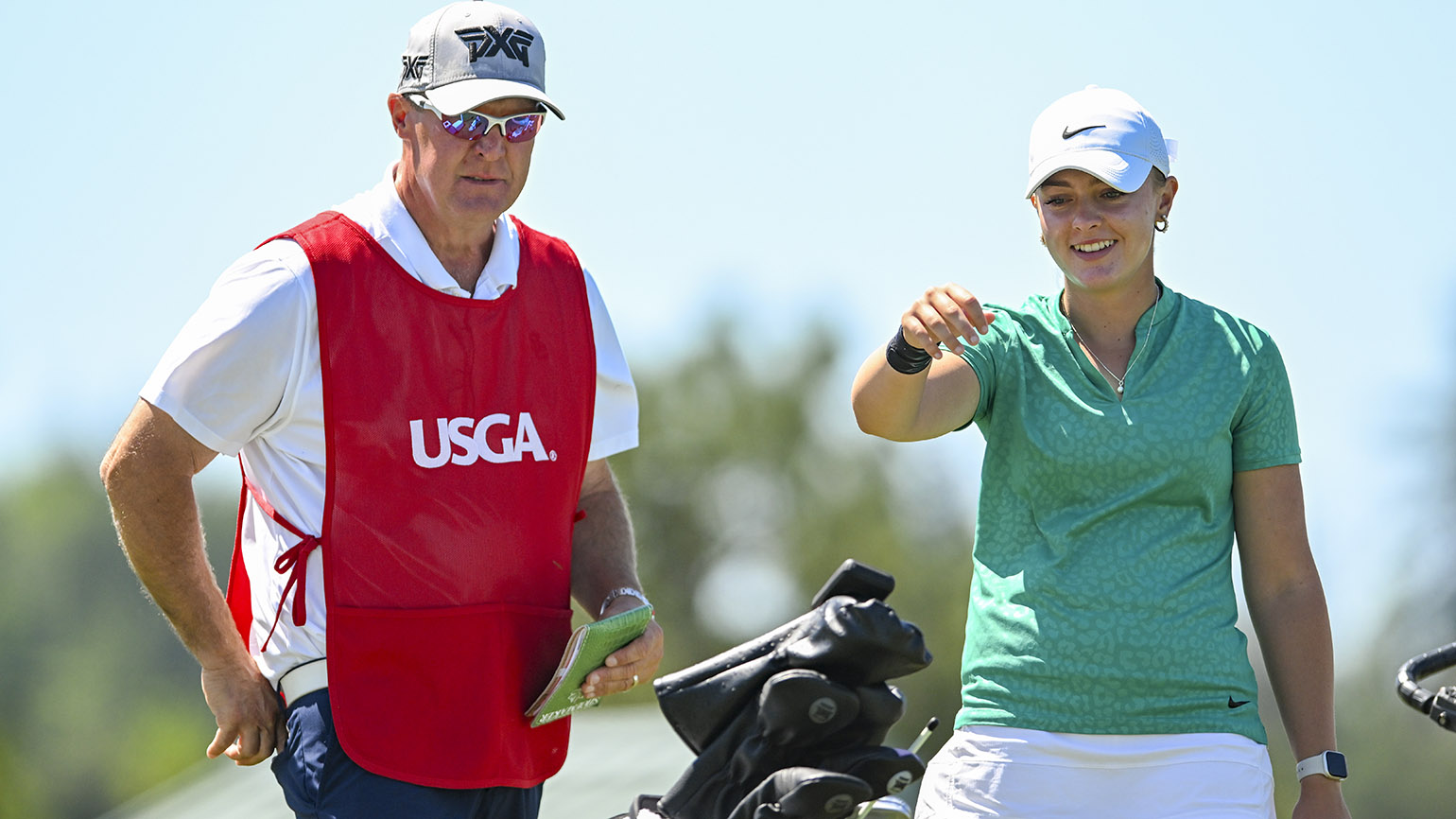
“[The doctors] just cut all that loose,” said Shoemaker.
Rehab took more than two months as she slowly went from hitting a few putts to finally playing nine holes on Christmas in Florida. By January, she was competing in the annual dual match against crosstown rival UCLA and in early February, Shoemaker was in the lineup for the Therese Hession Regional Challenge, where she tied for 12th. In fact, Shoemaker posted six top 10s this past spring, including runner-up in the Big Ten Championship, helping the Trojans reach the championship match of the NCAA Division I Championship at the Omni La Costa Resort & Spa, where they lost to a powerful Stanford squad. Shoemaker went 1-2 in the three matches.
The good form that people remembered as a junior golfer in 2022 when she made the cut in the U.S. Women’s Open at Pine Needles, reached the semifinals of the U.S. Women’s Amateur at Chambers Bay and was the runner-up in the U.S. Women’s Amateur Four-Ball (with partner and best friend Kaitlyn Schroeder), and again two years later when she shot a final-round 66 in the Augusta National Women’s Amateur to finish runner-up to Lottie Woad and reached the final 16 of both the U.S. Women’s Amateur and The Women’s Amateur Championship, had returned.
Coaches and media took notice as well. She earned All-America honors (second team by Women’s Golf Coaches Association and Golfweek) for the first time and was selected to represent the USA in the Palmer Cup at Tralee, in the Republic of Ireland, where she went 1-3 in the one-point defeat.
“I think she’s a much better golfer now,” said Silverstein, a former college player who endured five wrist surgeries. “The results last spring were much better than she had even her freshman year, which is where I think she would have thought she had played her best golf. But she’s at a much higher level now.”
Through all the rehab, Shoemaker picked up more speed, but more importantly, better practice habits. As a junior golfer and in her first two seasons at USC, it wasn’t unusual to see her beating balls all day. Now on a “pitch count,” Shoemaker was first limited to 10 balls and slowly increased to the current figure of 100. With less available time on the range, practice became more efficient.
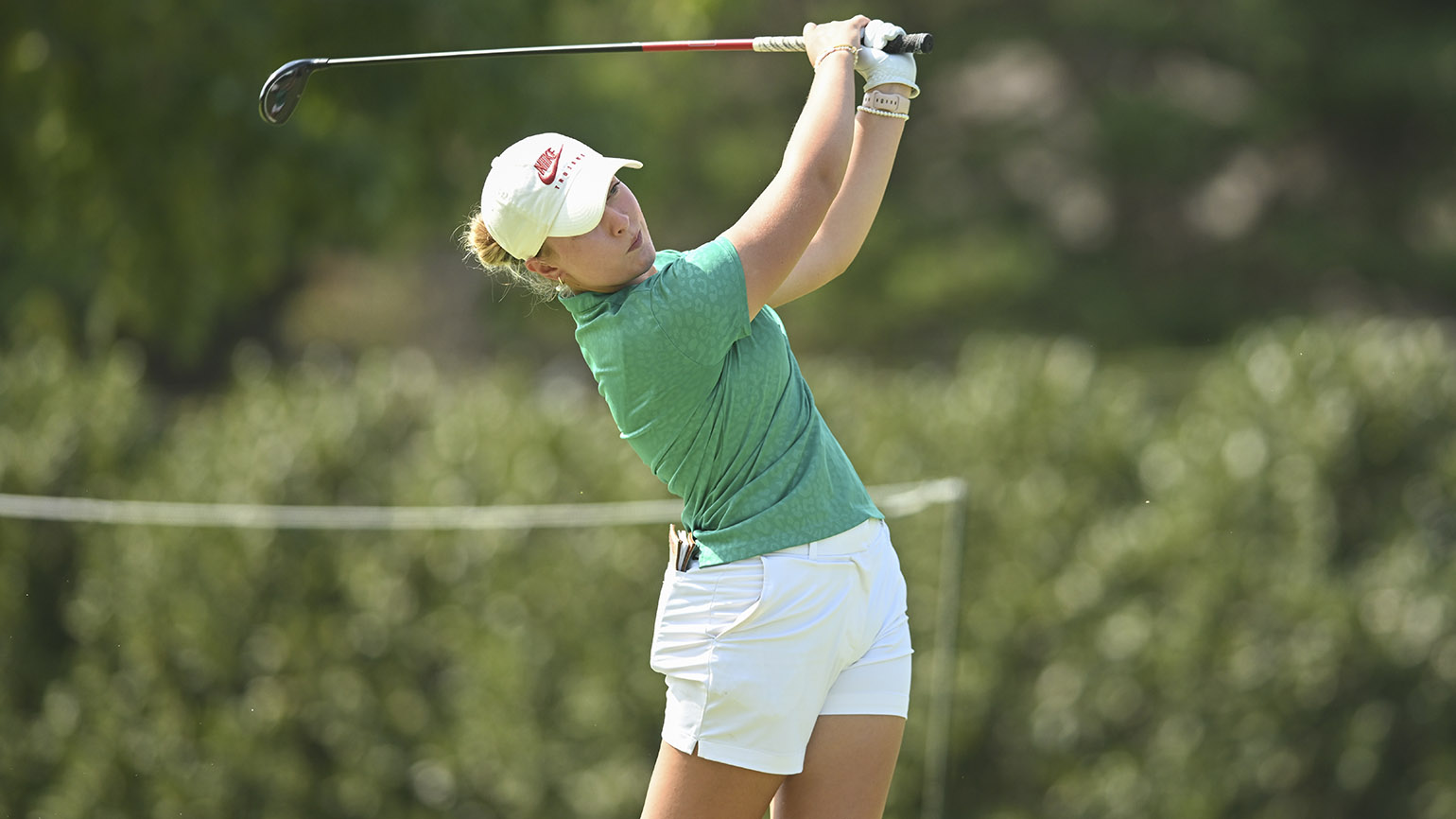
Another thing happened as well: she gained a further appreciation for golf. In a nutshell, she was far more grateful for the opportunity than ever before. Shoemaker used the word humbled to describe her new outlook.
No better example is what transpired at this year’s Augusta National Women’s Amateur during Round 2 at Champions Retreat. Because of her setback, Shoemaker wasn’t 100 percent comfortable hitting shots without the fear of the pain returning. That caused an uncharacteristically long delay in hitting one particular shot, which the cameras picked up and eventually went viral on social media.
Keyboard bullies had a field day attacking someone without any proper context. The situation rattled Shoemaker but also made her tougher.
“That’s way beyond golf,” she said. “That’s a life problem. Honestly, I did a lot of praying. My faith kind of helps me a lot with that.”
Surrounded by family and boyfriend Jared Martinez, a former women’s tennis manager at USC whom she met as a sophomore while he was obtaining his master’s degree in aerospace engineering (he now works at Joby Aviation, a California-based aviation company developing electric vertical takeoff and landing aircrafts for commercial air taxi services), Shoemaker overcame the cyber threats, some of which were quite personal.
Little did those bullies know that Shoemaker’s college major is intelligence and cyber operations, and she is more than capable of tracking down people and hacking into their computers. She, in fact, managed to log into Martinez’s premium Spotify account prior to their second date, and she’s done the same with her mom’s bank account.
This summer, she contemplated interning with the Secret Service, but between golf and rehab, there wasn’t enough time. But if professional golf doesn’t pan out, Shoemaker, a USC Mark Scholar for 3.0-plus student-athletes and a member of the Dean’s List the last two semesters, likely will seek employment with the CIA (Central Intelligence Agency), FBI (Federal Bureau of Investigations) or another government agency.
“My dad has always made sure that I put [academics] first beyond anything because [my parents] used to tell me in high school that I can be injured and everything can go away one day,” said Shoemaker, who now fully understands those words of wisdom.
Shoemaker grew up in a rural central New York State community, attending a K-12 school with an enrollment of 750 students. Had she not left at 15 for Florida, her graduating class would have been 50. Her uncle, William Shoemaker, built a 9-hole municipal course (Red Pines) where she regularly played until joining nearby Seven Oaks Country Club adjacent to Colgate University, in Hamilton. But harsh winters prompted the move to warmer climes and year-round golf instead of spending the winter months on an indoor simulator.
By eighth grade, Shoemaker had verbally committed to USC and former head coach Andrea Gaston (she eventually became Silverstein’s first big recruit). The idea of going to a West Coast school thousands of miles from home didn’t faze her. Long before the NCAA changed its rules regarding contact with prospective student-athletes to June 15 of their upcoming junior year, Shoemaker, a multi-time American Junior Golf Association All-American who was the 2022 Florida State Golf Association’s Player of the Year, visited many of the top programs, including Stanford, Texas, Virginia, Florida, Duke and USC.
Southern California checked all the boxes.
It also didn’t hurt that future LPGA Tour winner Annie Park and Karen Chung – both from Metropolitan New York area – had enjoyed success at USC.
Shoemaker, a past U.S. Junior Solheim Cup competitor who was a top-3 recruit in the Class of 2023, has not regretted the decision, getting to play alongside collegiate stars and USA Curtis Cuppers Amari Avery, Catherine Park and Jasmine Koo. Blessed with girl-next-door looks, a megawatt smile and Phi Beta Kappa intelligence, Shoemaker seemingly has everything a coach – and professional golf – would want.
“Game wise, she is hitting it better than she ever has,” said Silverstein. “I don’t think that has anything to do with the injury … I think she was becoming a better ball striker. She just has a regrown appreciation for being able to play again.”
With her ranking falling outside the top 50 of the Women’s World Amateur Golf Ranking®/WAGR®, Shoemaker had to go through qualifying to get into this year’s U.S. Women’s Amateur. For so many years, she was exempt for finishing T-49 in the U.S. Women’s Open and/or reaching the semis of the U.S. Women’s Amateur. This year, however, the qualifier was at Palos Verdes Golf Club, where USC regularly practices, and a 6-under 66 earned her medalist honors.
That same day, Schroeder, whom Shoemaker doesn’t see as often being on the West Coast because she plays at the University of North Florida where her dad, Scott, is the director of golf, also got into the field.
They roomed together at the recent Canadian Women’s Amateur, and practice rounds at the U.S. Women’s Amateur have been arranged.
“We are very excited,” said Shoemaker.
Even better, she’ll play pain free.
David Shefter is a senior staff writer at the USGA. Email him at dshefter@usga.org.

© 2026 United States Golf Association. All Rights Reserved.