

Merion Golf Club • Ardmore, Pa.
Philadelphia Country Club • Gladwyne, Pa.
August 10-16, 2026
More
U.S. AMATEUR
Top 10 USGA Championships Conducted at Merion Golf Club

Top 10 USGA Championships Conducted at Merion Golf Club
No venue in America has hosted more USGA championships than Merion Golf Club, in Ardmore, Pa. Nineteen events have been held at the Philadelphia Main Line club, including five U.S. Opens and six U.S. Amateurs – the latter of which will return there this August.
From the iconic wicker basket flagsticks to all the legendary players who have strolled the fairways, Merion reeks of history. It’s where Bob Jones made his USGA debut in 1916. Ben Hogan competed in his first U.S. Open there as a relatively unknown 21-year-old in 1934. Jack Nicklaus set an Eisenhower Trophy 72-hole scoring record at Merion in the 1960 World Amateur Team Championship, then had a memorable duel 11 years later that involved some playful chicanery from his playoff foe.
With Merion returning to the USGA spotlight in 2026, we decided to look back at the top 10 USGA championships ever conducted there, with a few honorable mentions.
1950 U.S. Open
Sixteen months removed from a near-fatal automobile accident with a Greyhound bus in West Texas, Ben Hogan arrived at Merion with his legs heavily bandaged to prevent further swelling. In February of that year, Hogan had returned to the PGA Tour at the Los Angeles Open, losing a playoff to Sam Snead. So, it wasn’t as if he came into this U.S. Open totally rusty. The Texan also was two years removed from winning his first U.S. Open at The Riviera Country Club, in Pacific Palisades, Calif. (He did not defend in 1949 due to the accident.)
Due to cold and damp conditions, Hogan only played one practice round, and was quoted as saying, “I think anybody who plays this course before Wednesday is crazy.”
Hogan played himself into contention going into Saturday’s 36-hole marathon. Back then, the championship concluded with 36 holes on Saturday (the current format of four rounds in four days began in 1965). After the first 18 holes of the day, Hogan found himself two strokes behind Lloyd Mangrum, the 1946 champion, going into the final round.
While most remember his 1-iron approach to the 72nd hole, a shot captured by Hy Peskin and considered one of golf’s greatest photographs, people often forget Hogan owned a two-stroke lead with four holes to play. He three-putted No. 15, missing a 30-inch par putt. He then failed to get up and down for par from a greenside bunker on the challenging par-3 17th. Now Hogan needed a par at the 458-yard closing hole to get into an 18-hole playoff with George Fazio and Mangrum.
His 1-iron found the green and he two-putted from 40 feet to force the Sunday playoff, where he holed a 50-foot birdie putt on No. 17 and parred 18th for a victory many thought was improbable given his physical condition.
One interesting note from the playoff, the 1-iron Hogan used to hit that iconic shot the previous day was not in his bag. That night, several items were taken from his locker, including the 1-iron, and for three decades the mystery of the heist went unsolved. In 1982, an anonymous man walked into a golf collector’s shop in Williamsburg, Va., looking to sell some Ben Hogan signature MacGregor clubs, and the 1-iron marked “personal model” was discovered. It now permanently resides in the USGA Museum, in Liberty Corner, N.J.
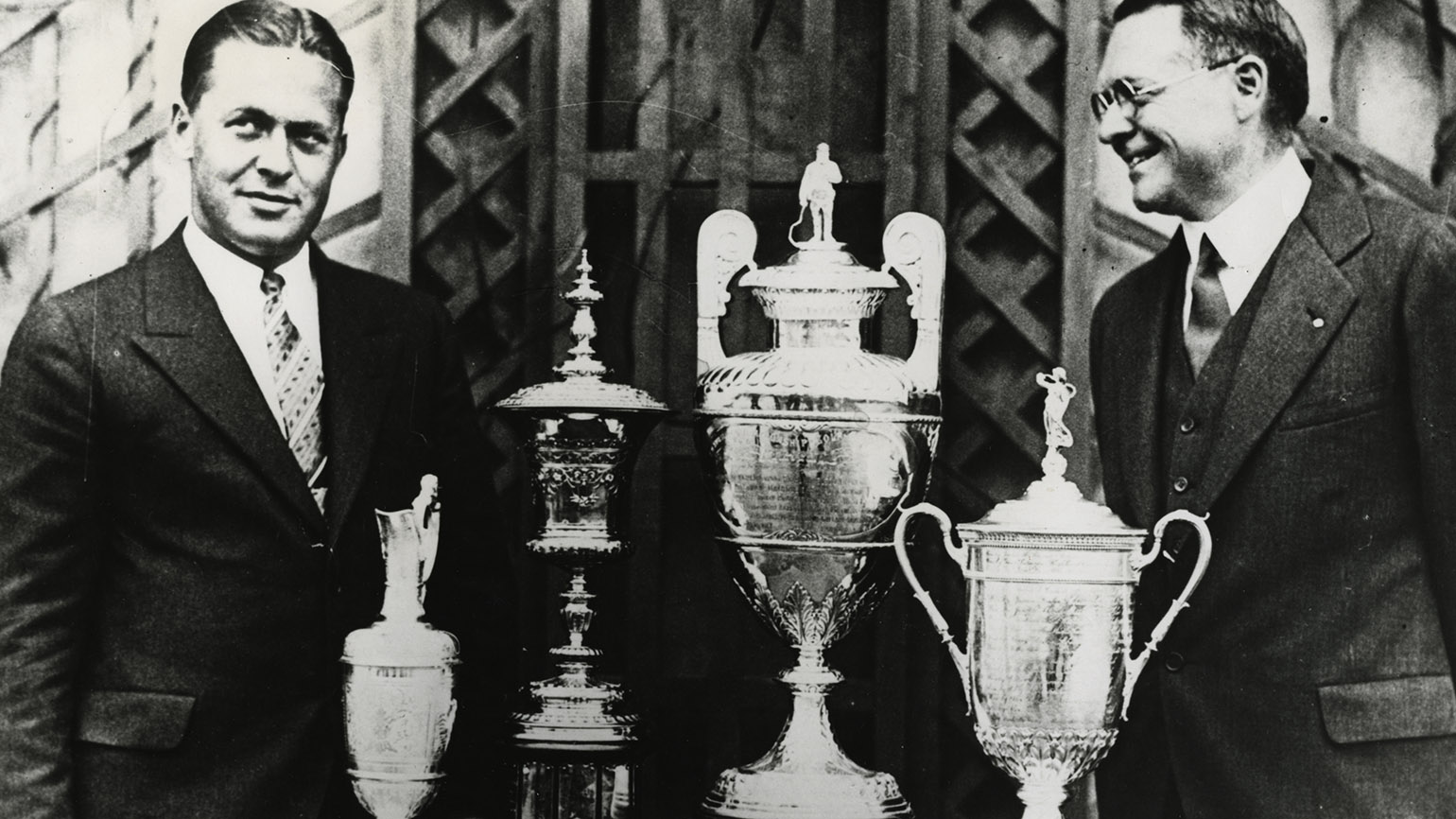
1930 U.S. Amateur
Bob Jones first announced himself to the nation as a 14-year-old at the 1916 U.S. Amateur at Merion by reaching the quarterfinals. Now 28 and already a winner of that year’s British Open, British Amateur and U.S. Open, the Georgian was seeking immortality by claiming all four of golf’s major championships in the same year. This was four years before the Masters was created – and later became a major championship – while the PGA Championship, then conducted at match play, was still in its relative infancy.
Huge crowds gathered at Merion Golf Club to witness history, and Jones delivered just like he did six years earlier when he hoisted the Havemeyer Trophy by claiming the 1924 U.S. Amateur. This time there was a lot more weight on his shoulders. He was clearly the most dominant player in the game – amateur or professional. Jones had already won four U.S. Open titles, including the 1930 championship at Interlachen Country Club outside of Minneapolis.
Just how dominant was Jones? In the 36-hole semifinal match against good friend and fellow Walker Cupper Jess Sweetser, he posted a 9-and-8 victory. A record gallery of 18,000 returned to Merion for the next day’s 36-hole final against Eugene Homans and Jones was just as dominating in registering an 8-and-7 victory.
Merion is one of the few clubs that has a display of the trophies from all four of those 1930 “majors.” Jones, who retired from competitive golf after that victory, would amass nine USGA titles, which currently ties him for the most with Tiger Woods.
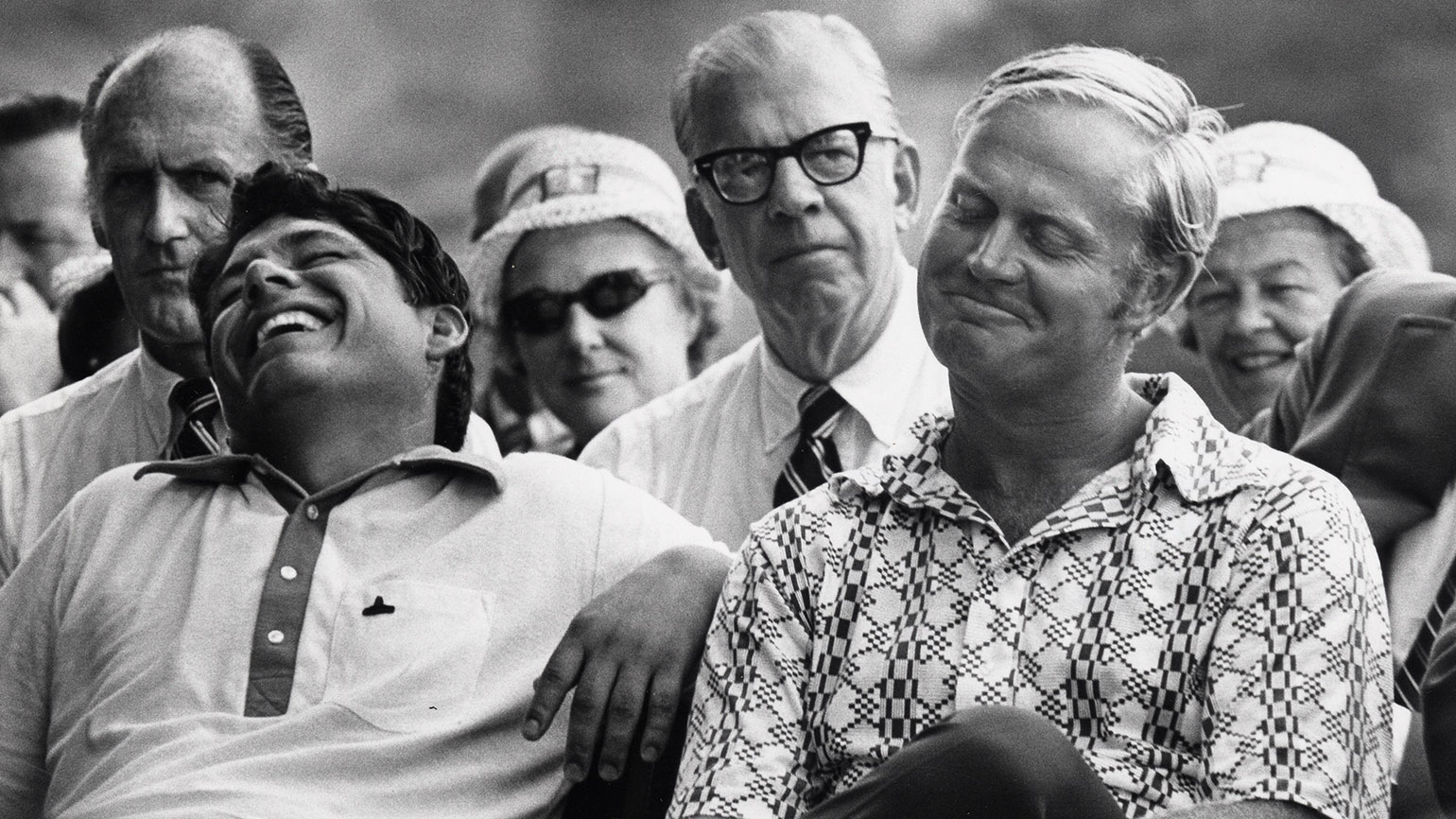
1971 U.S. Open
Ever the prankster, Lee Trevino decided the proper way to break the tension prior to his 18-hole playoff with Jack Nicklaus was to toss a toy at the legendary champion. The rubber snake had been in his bag for some three months, a trinket he had purchased for his daughter at the Fort Worth Zoo.
Nicklaus asked Trevino to toss the fake amphibian his way and everyone had a chuckle. Nicklaus even birdied the first playoff hole to Trevino’s bogey. That would be the last time the Golden Bear enjoyed a lead. He went bogey-double bogey over his next two holes, allowing Trevino to go up two strokes. Even a one-hour weather delay would not sidetrack the Merry Mex from capturing his second U.S. Open title in three years. A 2-under 68 sealed Trevino’s three-stroke victory.
Nicklaus, who was paired in the final round with amateur Jim Simons, could have won the championship on the 72nd hole, but missed a 14-foot birdie putt.
“Merion gave me my career,” Trevino told a newspaper reporter. “Up until Merion, the way this played out, I never felt comfortable. I never thought that I belonged. I was a professional golfer, and I had won a few tournaments, but I didn't really feel like I was in the fraternity. When I got into the playoff and I beat Jack, I beat the best player in the world. It wasn't so much that I had won the Open for the second time, it was who I defeated to do it. It finally made me feel like I belonged in the fraternity.”
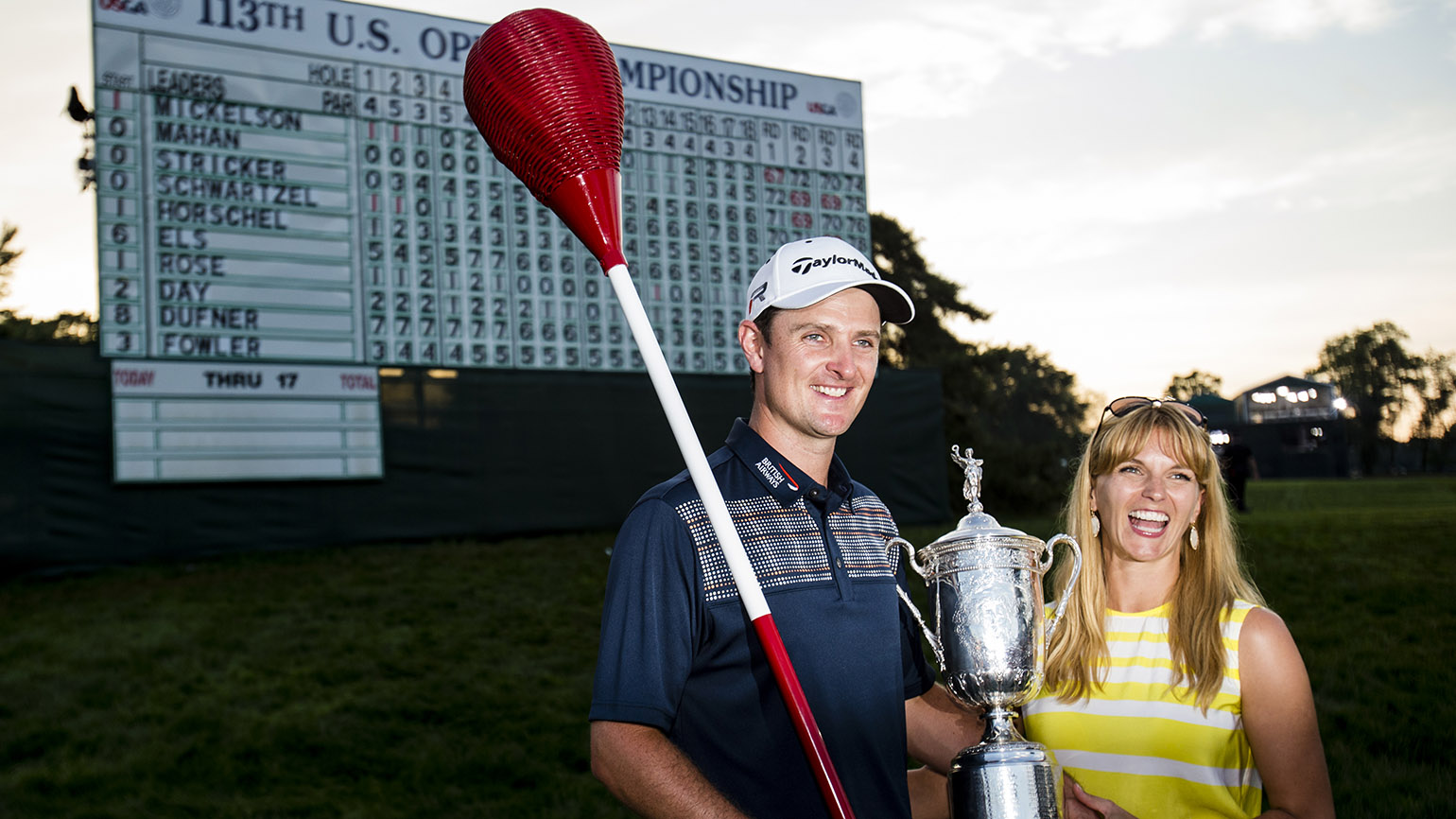
2013 U.S. Open
Midway through the final round, it appeared that Phil Mickelson would finally get his elusive U.S. Open victory. There had been so many previous close calls, including his disastrous double-bogey-6 on the 72nd hole of the 2006 U.S. Open at Winged Foot. Mickelson needed only the U.S. Open title to complete the career Grand Slam. And when he holed out from the fairway for eagle on the short par-4 10th, the San Diego native had the lead.
Then it all unraveled on the par-3 13th. A Mickelson bogey and consecutive birdies by Justin Rose on 12 and 13 vaulted the affable Englishman into the lead. He held a one-stroke lead after 16 holes, and when he dropped his par putt on No. 18 to secure his first major championship, Rose looked up to the heavens as a tribute to his late father.
Rose became the first player from England to claim the U.S. Open since Tony Jacklin in 1970.
“It feels fantastic,” said Rose. “ ... it's a moment where you can look back and think childhood dreams have come true.”
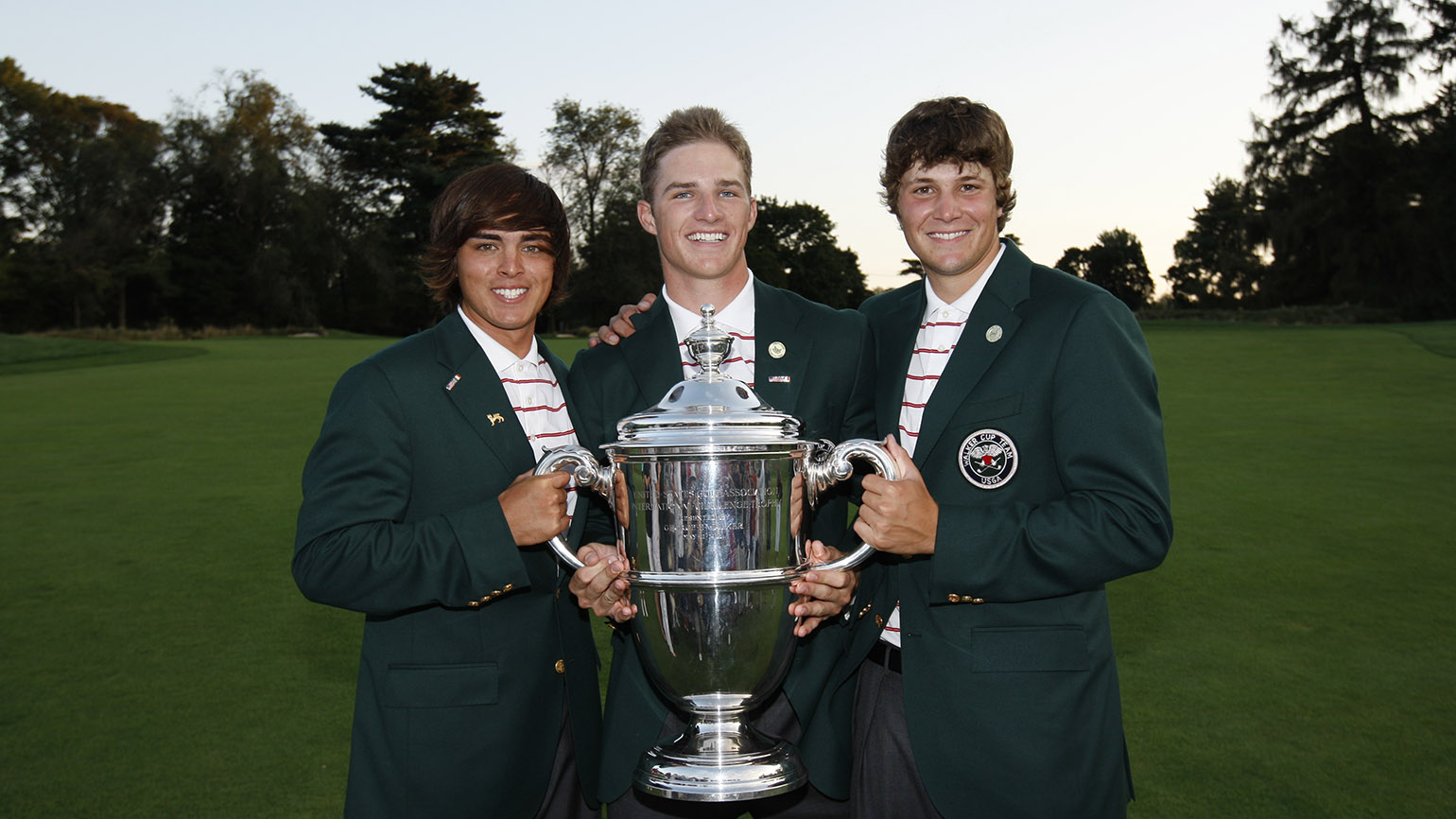
2009 Walker Cup
Looking back, this particular Walker Cup featured a ton of players who would enjoy future success as professionals. The American side boasted future British Open champion Brian Harman, future Players champion Rickie Fowler as well as Bud Cauley, Peter Uihlein, Morgan Hoffmann and Cameron Tringale. Uihlein would win the U.S. Amateur the following year at Chambers Bay, and career amateur Nathan Smith would serve as captain for the victorious 2025 USA Walker Cup Team at Cypress Point. Great Britain & Ireland was devoid of players who would star at the next level, but one guy, Tommy Fleetwood, has become a top-5 player. Fleetwood would post a 1-1 mark in singles (ironically given his future Ryder Cup success, he did not play in either foursomes session), defeating past British Amateur champion Drew Weaver on Sunday.
But Fowler, a holdover from the victorious 2007 team, went a perfect 4-0, and Uihlein, a fellow Oklahoma State Cowboy, would deliver the decisive 13th point to retain the Cup with a 3-and-1 win over Stiggy Hodgson. Hoffmann’s 1-up win over Wallace Booth would secure the victory as the USA, captained by Philadelphia native and Merion member Buddy Marucci, won by seven points.
1949 U.S. Women’s Amateur
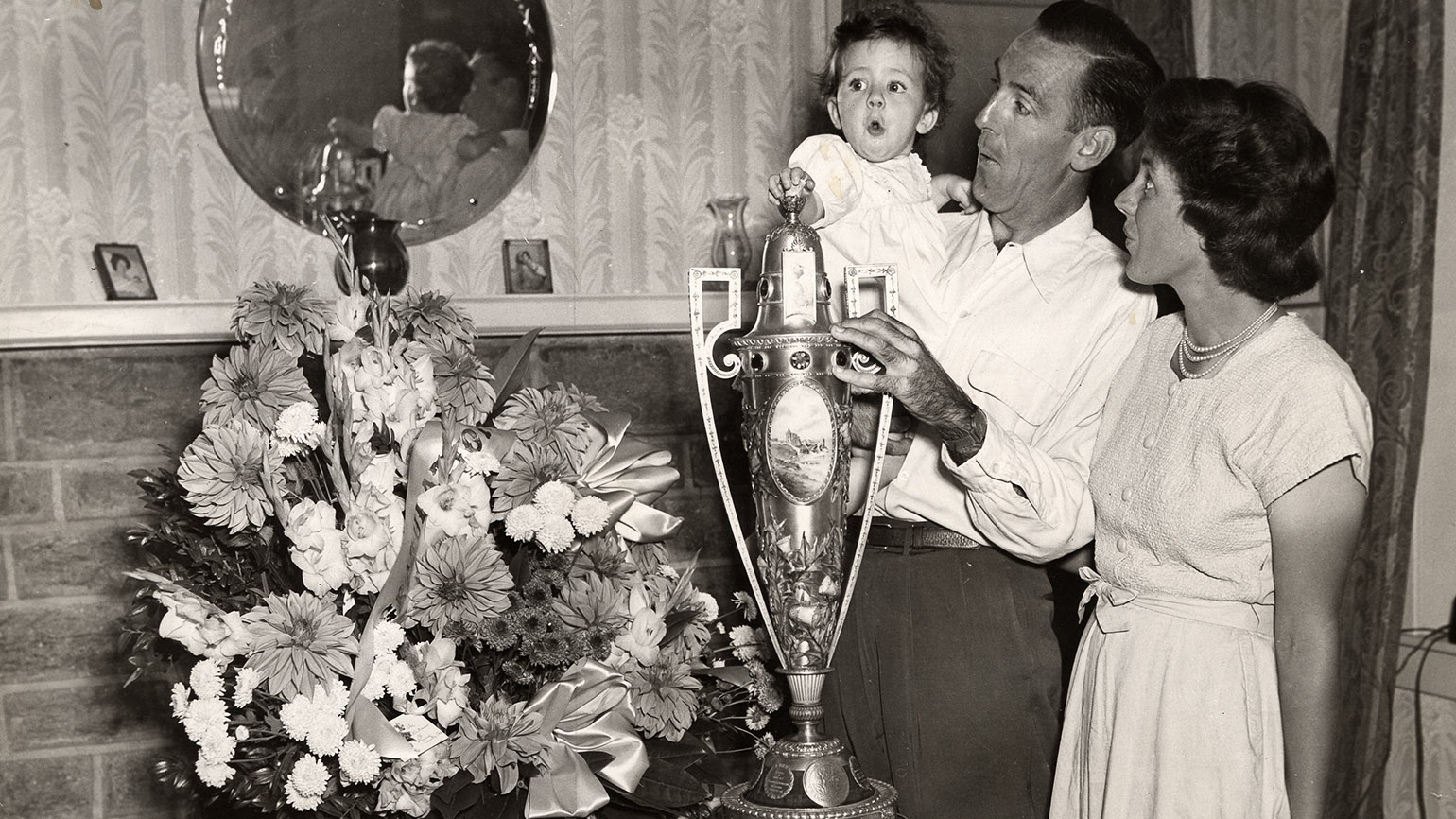
Four U.S. Women’s Amateurs have been held at Merion, dating back to 1904, the first USGA championship ever held on the property. Georgianna Bishop hoisted the Robert Cox Trophy that year.
In 1949, women’s golf was enjoying quite an evolution. During the week of the U.S. Women’s Amateur, the LPGA was founded in New York City. Women’s amateur golf in the United States was about to see big changes over the next couple of decades as the professional game evolved and fewer players remained career amateurs.
Dorothy Germain Porter, a Philadelphia native who was a field hockey player at Beaver College (now Arcadia University), had already established herself as a top amateur golfer in the state, winning three consecutive Pennsylvania Women’s Amateurs from 1946-48. When she arrived at the 1949 U.S. Women’s Amateur, she was already a mother of a toddler and two months pregnant with her second child.
She defeated highly touted Dorothy Kirby in the semifinals, 2 and 1 and reached the zenith of her career by taking down Dot Kielty, 3 and 2, in the 36-hole final. The other semifinal saw Kielty upend 15-year-old Marlene Bauer, who had won the inaugural U.S. Girls’ Junior earlier that year at Philadelphia Country Club, which will serve as the stroke-play co-host venue for the 2026 U.S. Amateur.
2005 U.S. Amateur
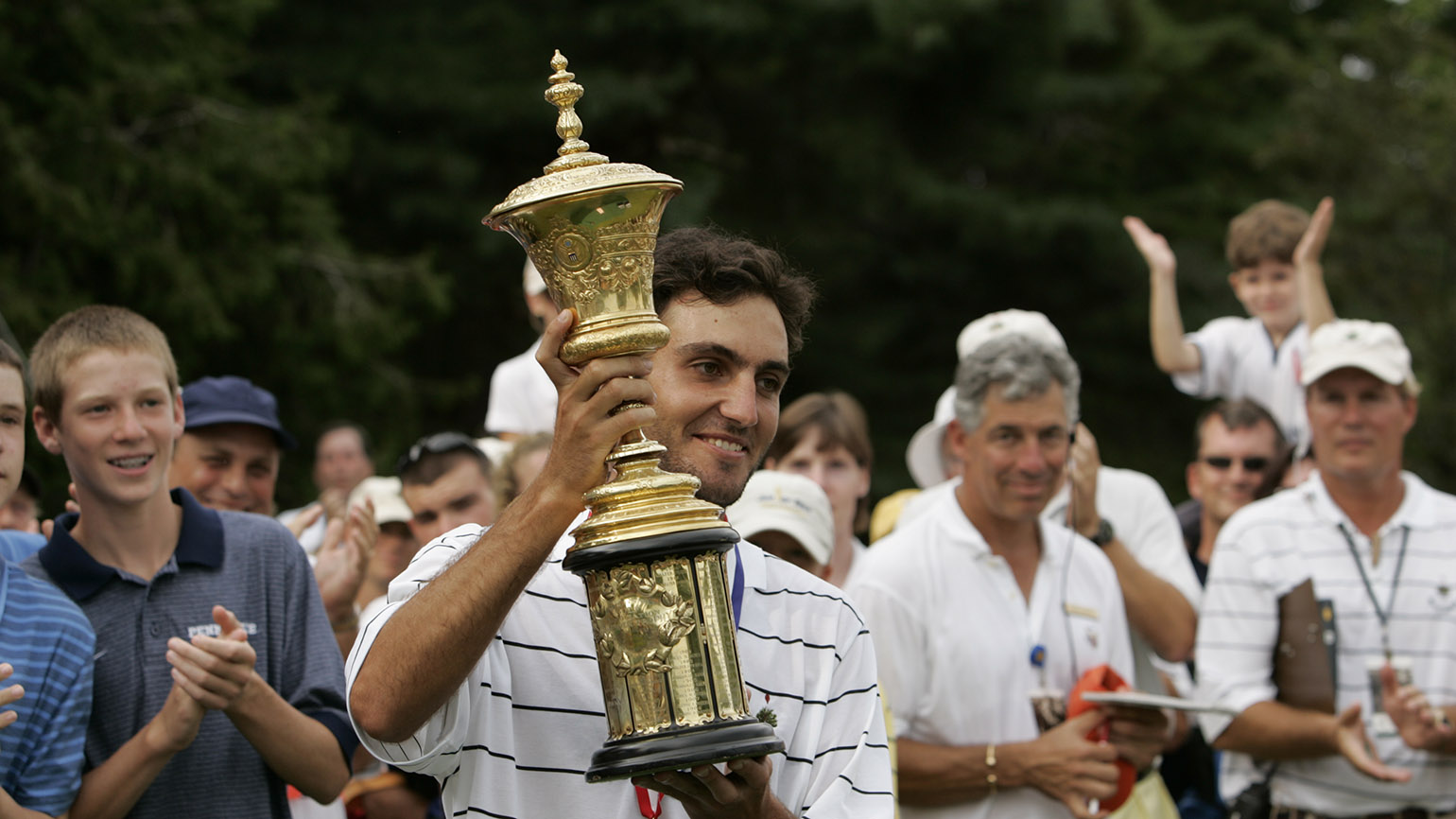
One of the great unknowns about Edoardo Molinari’s 2005 U.S. Amateur triumph is that he almost didn’t make the match-play bracket. The Italian, who is older than his well-known brother and 2018 British Open champion Francesco, holed out a bunker shot on the par-3 ninth hole of Merion’s East Course for a birdie that put him in a 19-for-17 playoff for the final match-play spots.
From there, Molinari, then 24, survived a 19-hole affair in the Round of 32 against University of Florida star Matt Every and took out the last remaining mid-amateur in the field, Austin Eaton III, in the semifinals, before posting a 4-and-3 victory over Californian Dillon Dougherty, a standout at Northwestern University.
Molinari joined 1997 U.S. Women’s Amateur champion Sylvia Cavalleri as the only Italians to have ever claimed a USGA title.
Molinari has since gone on to a successful professional career on the European Tour (now DP World Tour) and served as a vice captain to Luke Donald on the victorious 2025 European Ryder Cup Team.
1981 U.S. Open
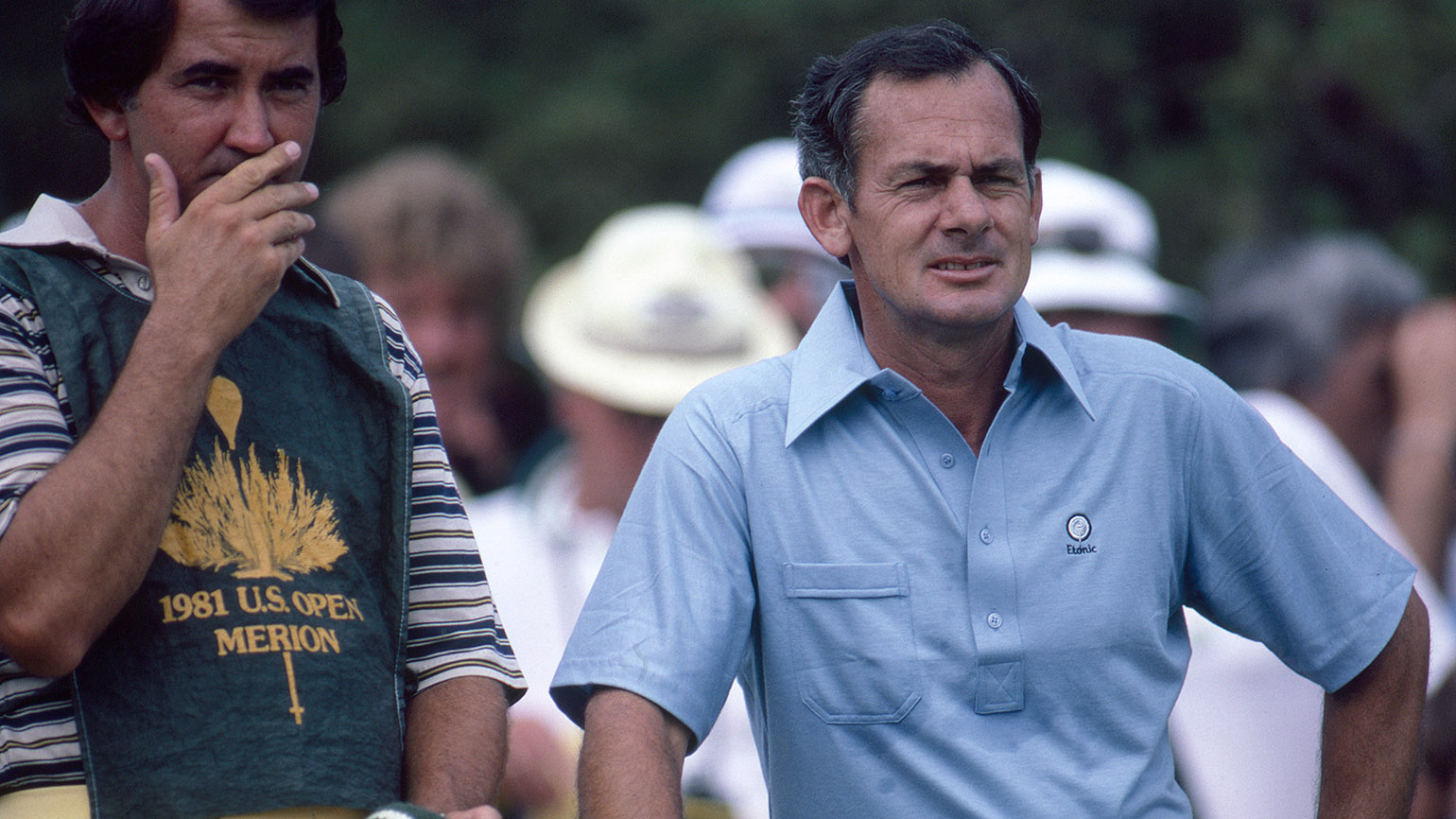
There have been few final rounds in U.S. Open history that were more exquisitely executed than the 3-under-par 67 that David Graham submitted on June 21, 1981, at Merion Golf Club.
If that has you wondering whether we’ve rung the bell on the hyperbole meter, well, we challenge you to name another champion who, in the cauldron of final-round pressure, picked apart one of the game’s most hallowed layouts as meticulously as Graham did on a warm, dry Sunday in suburban Philadelphia.
Graham hit all 18 greens in regulation, and he missed just one fairway.
Sounds like a recipe for winning the U.S. Open, which Graham did rather handily, beating George Burns and Bill Rogers by three strokes.
The Australian came into the U.S. Open without much success in the championship. He had only one top-10 finish in his previous 11 starts and shot 77-80 to miss the cut in the 1971 U.S. Open at Merion. Playing alongside Lanny Wadkins for the first two days, Graham posted a pair of 2-under 68s and he finished the championship at 7-under 273.
“That week [at Merion] I played the golf course exactly how I needed to play it or should play it,” said Graham, who two years earlier had claimed his first major title, the PGA Championship, at Oakland Hills in suburban Detroit. “I was a good long-iron player, so I only hit three or four drivers per round. Of course, a lot of guys did that, but on the longer holes when I had to hit a driver, I kept it in the fairway. I played the course to the strengths and weaknesses of my game. I putted decently, and if you putt well in a major championship, particularly a U.S. Open, the results are usually pretty good.”
2022 Curtis Cup
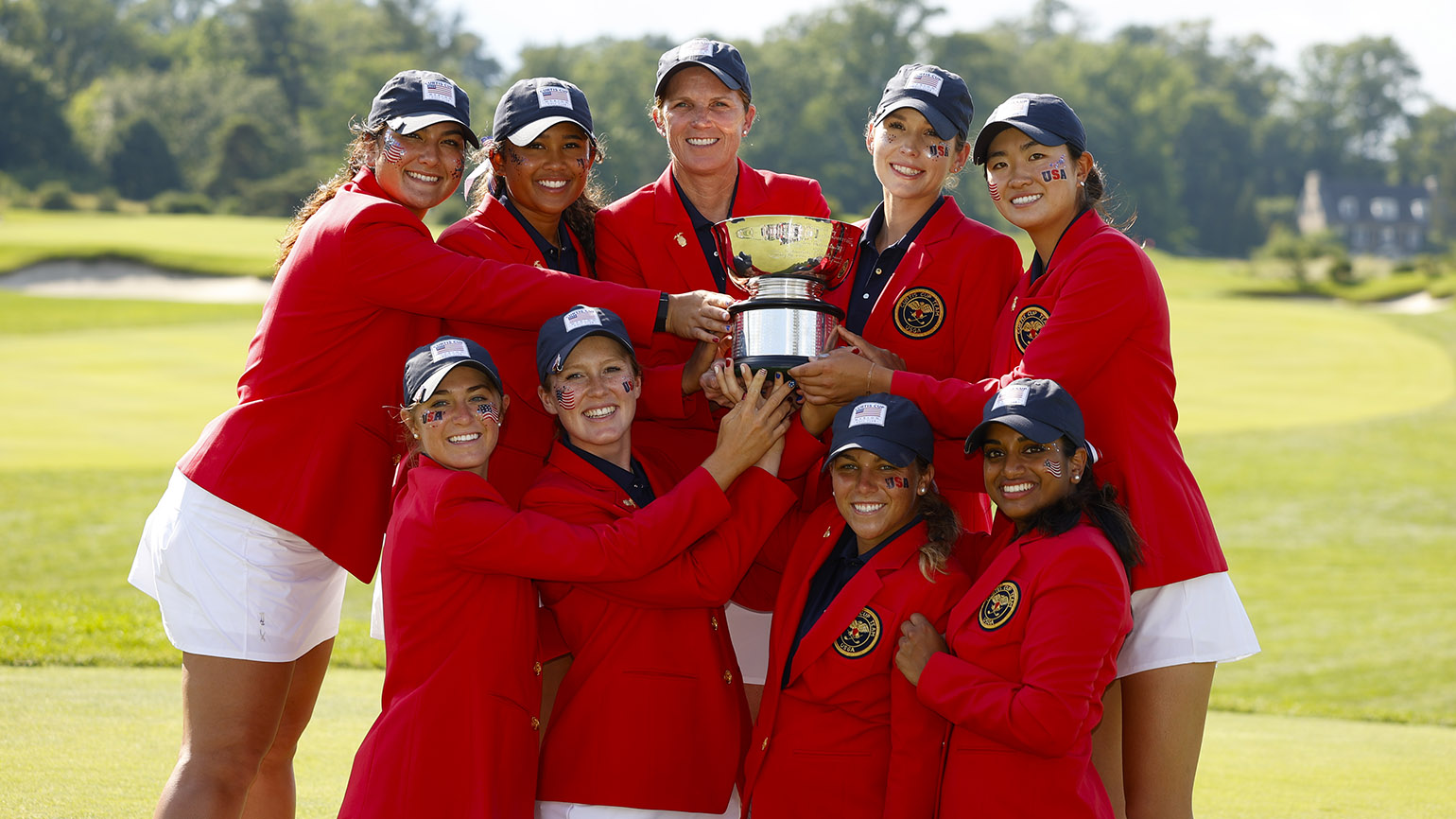
Merion got a rare opportunity to host the biennial Curtis Cup Match for a second time. Because COVID-19 had postponed the scheduled 2020 Match in Wales, the competition was being staged in consecutive years, with the Americans having won 12-8 at Conwy Golf Club.
Many of the same players were back for the 2022 competition, including Emilia Migliaccio (now Doran), Rachel Kuehn, Rose Zhang and Rachel Heck.
The breakout performer, however, was University of Southern California All-American Amari Avery, who posted a 4-1-0 record. She was disappointed with her Sunday singles loss to Emily Price – the only defeat in a dominant 7-1 session by the Americans – but Avery could celebrate with her seven other teammates that evening following a 15.5-4.5 rout of a Great Britain & Ireland Team that featured several U.S. college standouts. Caley McGinty (Ohio State), Lauren Walsh (Wake Forest), Hannah Darling (South Carolina), Annabell Fuller (Florida) and Amelia Williamson (Florida State) all enjoyed college success but were outplayed by the host team.
Stanford stars Heck and Zhang each went 2-0-1, while Wake Forest teammates Kuehn and Migliaccio were 4-0-1 and 2-1, respectively. Megha Ganne would later win the 2025 U.S. Women's Amateur at Bandon Dunes.
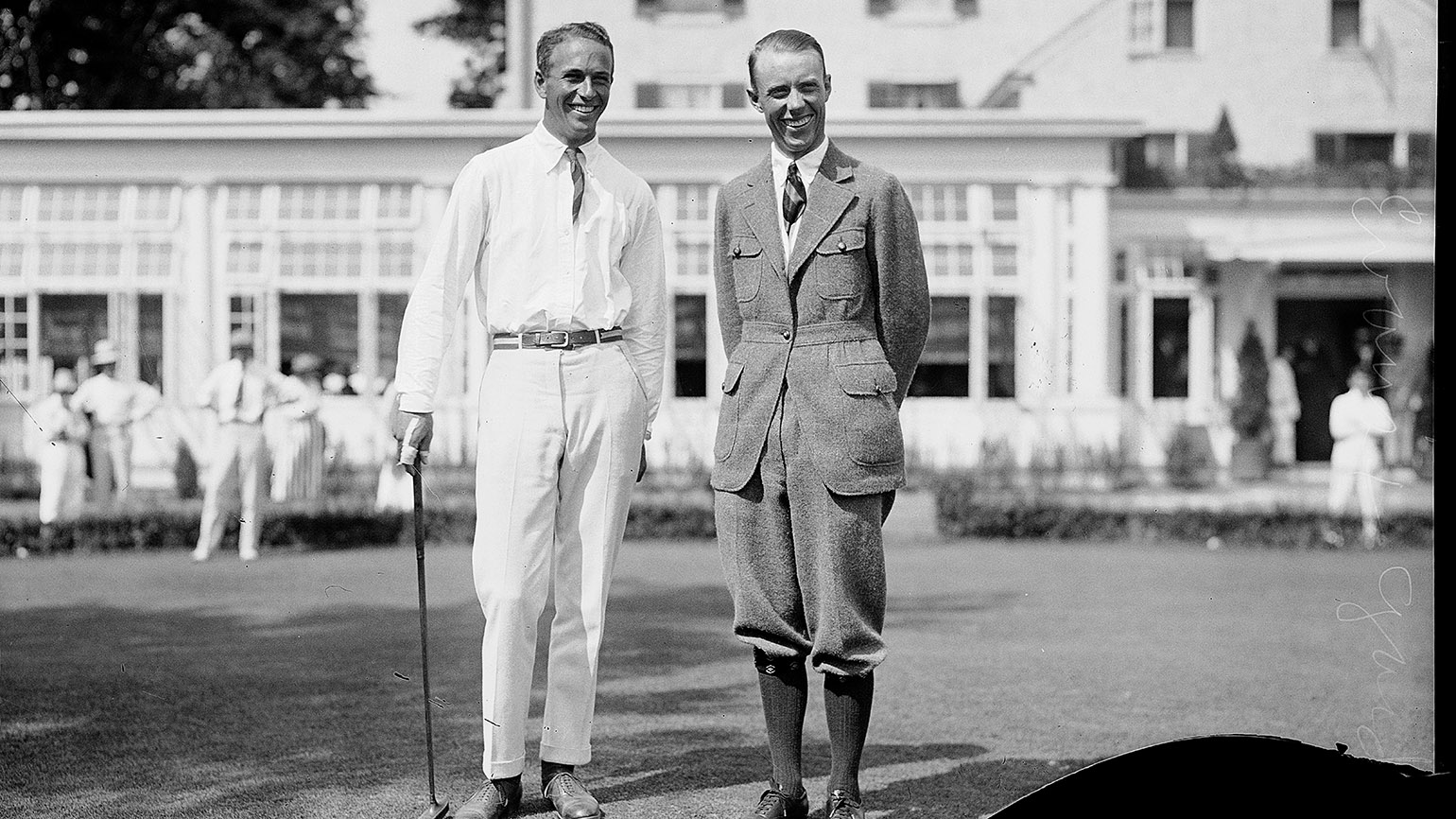
1916 U.S. Amateur
While Charles “Chick” Evans hoisted the Havemeyer Trophy in the first U.S. Amateur ever held at Merion, it was a 14-year-old Georgian who stole the headlines. Bob Jones made his first-ever start in the championship fresh off of winning the Georgia State Amateur. Jones would advance to the quarterfinals before being eliminated by Robert Gardner.
Evans, meanwhile, was coming off winning the U.S. Open three months earlier at Minikahda Golf Club, in Minneapolis. The country was only three years removed from Francis Ouimet’s historic U.S. Open feat of beating British stalwarts Harry Vardon and Ted Ray in a playoff at The Country Club.
Now the 26-year-old from Chicago had a chance to become the first to win the U.S. Open and U.S. Amateur in the same year.
A 4-and-3 victory over Gardner in the 36-hole final would give Evans that historic double.
In late June, Evans had steadied his putting – long considered a weak spot – and earned a two-stroke victory over Jock Hutchison in the 1916 U.S. Open.
Noted sportswriter Grantland Rice believed Merion was ideal for Evans’ game. “Control of the long iron is one of the key essentials to success, and control of the long iron is one of the strongest features of Chick’s play,” wrote Rice.
Honorable Mention
1998 U.S. Girls’ Junior: Leigh Anne Hardin defeats Brittany Straza, 2 up. Golf Journal magazine posted a photo of Hardin hitting a fairway metal into the 18th hole, mirroring the image shot by Hy Peskin 48 years earlier.
1989 U.S. Amateur: Clemson standout Chris Patton defeats mid-amateur Danny Green in the 36-hole final. Green would go on to become the first player in USGA history to play in the championship match of the U.S. Amateur, U.S. Mid-Amateur and U.S. Amateur Public Links.
1934: Olin Dutra holds off Gene Sarazen by one stroke in the first U.S. Open ever held at Merion.
1954 Curtis Cup: The Americans, led by Polly Riley, Barbara Romack and Philadelphia native Dorothy Kirby, roll to a 6-3 victory. Back then, the Match consisted of three 18-hole foursomes matches on Thursday and six 18-hole singles matches on Friday.
David Shefter is a senior staff writer at the USGA. Email him at dshefter@usga.org.
© 2026 United States Golf Association. All Rights Reserved.