
Saucon Valley C.C. (Old Course) • Bethlehem, Pa.
Saucon Valley C.C. (Grace Course) • Bethlehem, Pa.
July 20-25, 2026
More
U.S. JUNIOR AMATEUR
Ranking USGA Championships Held at Saucon Valley C.C.

Ranking USGA Championships Held at Saucon Valley C.C.
Sixteen business leaders, many from the Bethlehem (Pa.) Steel Corporation, acquired 205 acres of farmland along Saucon Creek in 1920 with the sole purpose of establishing a country club that would include an 18-hole golf course and other facilities for athletic endeavors.
Eugene Grace, considered the patriarch of Saucon Valley Country Club, wanted to ensure its golf course was second to none, hiring architect Herbert Strong to design the original course. Grace, Perry Maxwell and William Gordon provided revisions over the ensuing years, but kept the original routing intact. As an ode to Grace, a second 18-hole course, aptly named after the longtime member, was designed by William and David Gordon and opened in 1957.
Today, Saucon Valley C.C., which also acquired the nearby Weyhill Course to make the club one of the finest 54-hole private facilities in the country, is renowned for its three championship layouts.
The club also prides itself for hosting major competitions, notably USGA championships. The 1951 U.S. Amateur was contested at Saucon Valley, and this July, the club will host its ninth USGA competition, the 78th U.S. Junior Amateur. The Old and Grace courses will be used for the 78th U.S. Junior Amateur, the former hosting all of the matches.
Given that rich history, we decided to rank the eight previous championships held at Saucon Valley:
2022 U.S. Senior Open (Padraig Harrington)
Saucon Valley became the first club to host the premier 50-and-over championship three times, following the 1992 and 2000 championships. All eyes were on Padraig Harrington, who had turned 50 the previous August and was making his U.S. Senior Open debut.
The affable Irishman and World Golf of Famer made his mark long before joining PGA Tour Champions, winning three majors (a PGA and two Open Championships) as well as starring on six European Ryder Cup Teams.
The “rookie” looked the part of a pre-championship favorite, posting rounds of 71-65-66 on the Old Course to take a five-stroke lead into Sunday’s final round. It looked to be a mere formality that Harrington would garner his first senior major championship.
But somebody forgot to tell Steve Stricker. The 2019 champion had been the circuit’s premier player when he decided to tee it up against his fellow 50-plus-year-olds. The Madison, Wis., native nearly pulled off a miracle Sunday charge, shooting a 6-under 65, only to come up one stroke short.
Appearing as if he might relinquish all of his five-shot advantage, Harrington drained a clutch 30-foot birdie putt on the par-4 15th hole to post a 72-hole total of 10-under 274. Harrington became the third consecutive player – and 11th overall – to win the U.S. Senior Open in his debut.
Three years later, Harrington would collect his second U.S. Senior Open title at The Broadmoor, which joined Saucon Valley as a three-time host (Scioto Country Club will join that list in July.). Speaking of Scioto, Harrington won No. 3 earlier this month, registering a four-stroke victory over Stewart Cink, thanks to a final-round 66.
“I think it's special for me to win this one just because I've never won a USGA event,” said Harrington. “Because I was never a U.S. Open champion or a junior champion, it's great to come and win the senior one. It adds something that I never had in my career.”
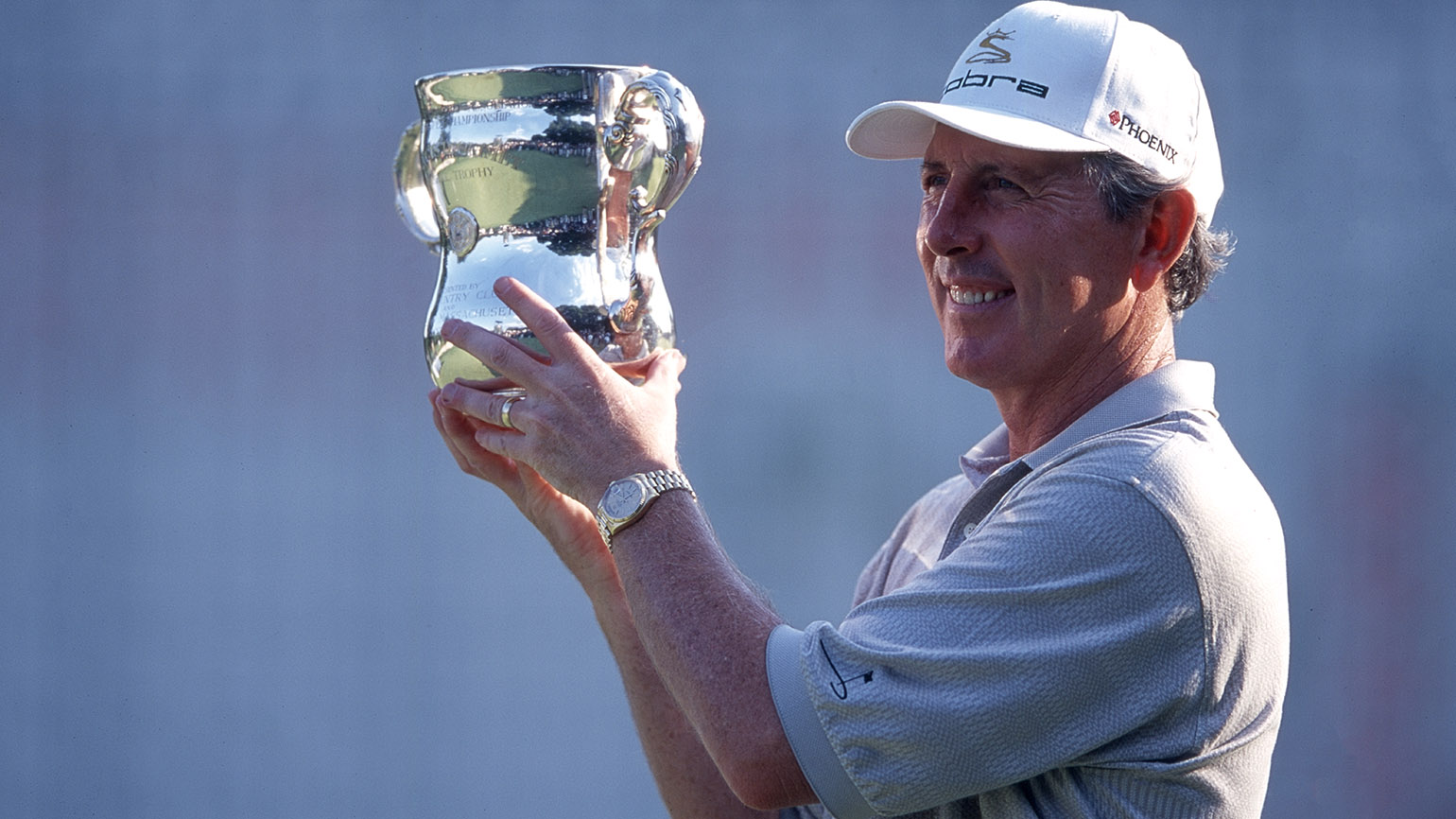
2000 U.S. Senior Open (Hale Irwin)
Another World Golf Hall of Fame inductee captured the second U.S. Senior Open held at Saucon Valley C.C. Two years after winning his first U.S. Senior Open, three-time U.S. Open champion Hale Irwin closed with a pair of 6-under 65s to rally past 54-hole leader Bruce Fleisher by three strokes.
Fleisher, the 1968 U.S. Amateur champion who would go on to win the 2001 championship at Salem Country Club, in Peabody, Mass., had actually led after each of the first three rounds, shooting 64-69-67 to pull ahead of Irwin by two strokes.
Irwin, the winner of the 1974, 1979 and 1990 U.S. Opens and the champion of the U.S. Senior Open two years earlier at The Riviera Country Club, established a 72-hole scoring record of 17-under 267, a feat that would be later matched by Kenny Perry in 2017 and surpassed by Steve Stricker (261) in 2019.
This was also Irwin’s 28th title on the senior circuit (sixth senior major). He would eventually amass 45 PGA Tour Champions victories, a mark that would be surpassed by Bernhard Langer when he claimed the 2023 U.S. Senior Open at the age of 66 at SentryWorld, in Stevens Point, Wis.
Low-amateur honors went to future two-time U.S. Senior Amateur champion Kemp Richardson, whose father, John, won the 1987 U.S. Senior Amateur at Saucon Valley.
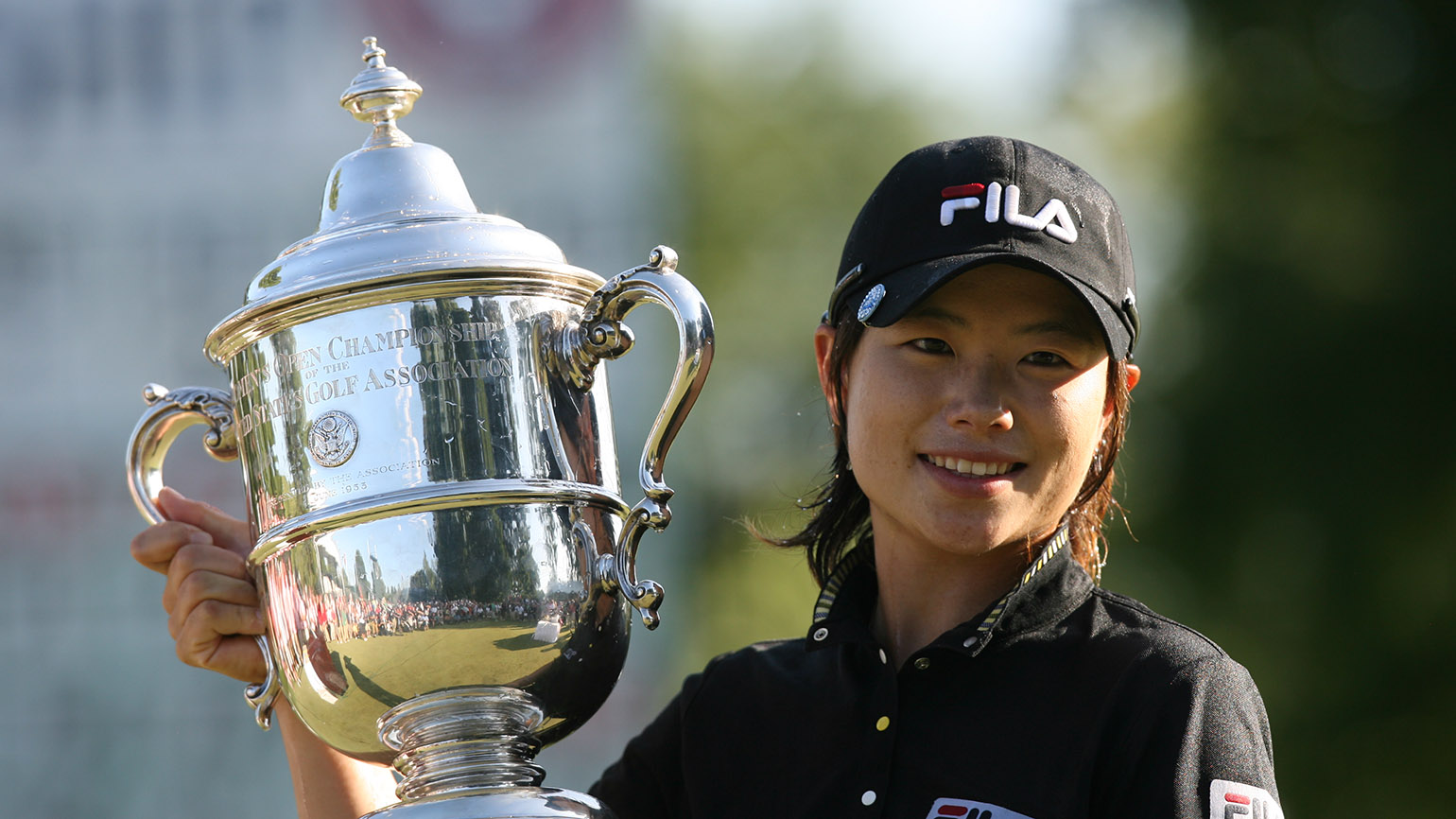
2009 U.S. Women’s Open (Eun-Hee Ji)
If you like dramatic finishes, the 2009 U.S. Women’s Open was the place to be. Although bigger names contended earlier in the championship – see Lorena Ochoa, Paula Creamer and Cristie Kerr (the 36- and 54-hole leader), the competition would come down to a pair of less-heralded LPGA Tour players.
Neither Eun-Hee Ji nor Candie Kung had won a major, although the latter enjoyed a decorated amateur career that included winning the 2001 U.S. Women’s Amateur Public Links while starring at the University of Southern California.
But Ji, then a 23-year-old with just one prior LPGA Tour victory, became the latest woman from the Republic of Korea to hoist the Harton S. Semple Trophy, holing a dramatic 20-foot birdie putt on the 72nd hole to edge Kung by a single stroke. Ji carded a final-round 71 for a 72-hole total of even-par 284. Kung shot a Sunday 69, while Kerr struggled to a 75 and settled for a share of third with I.K. Kim.
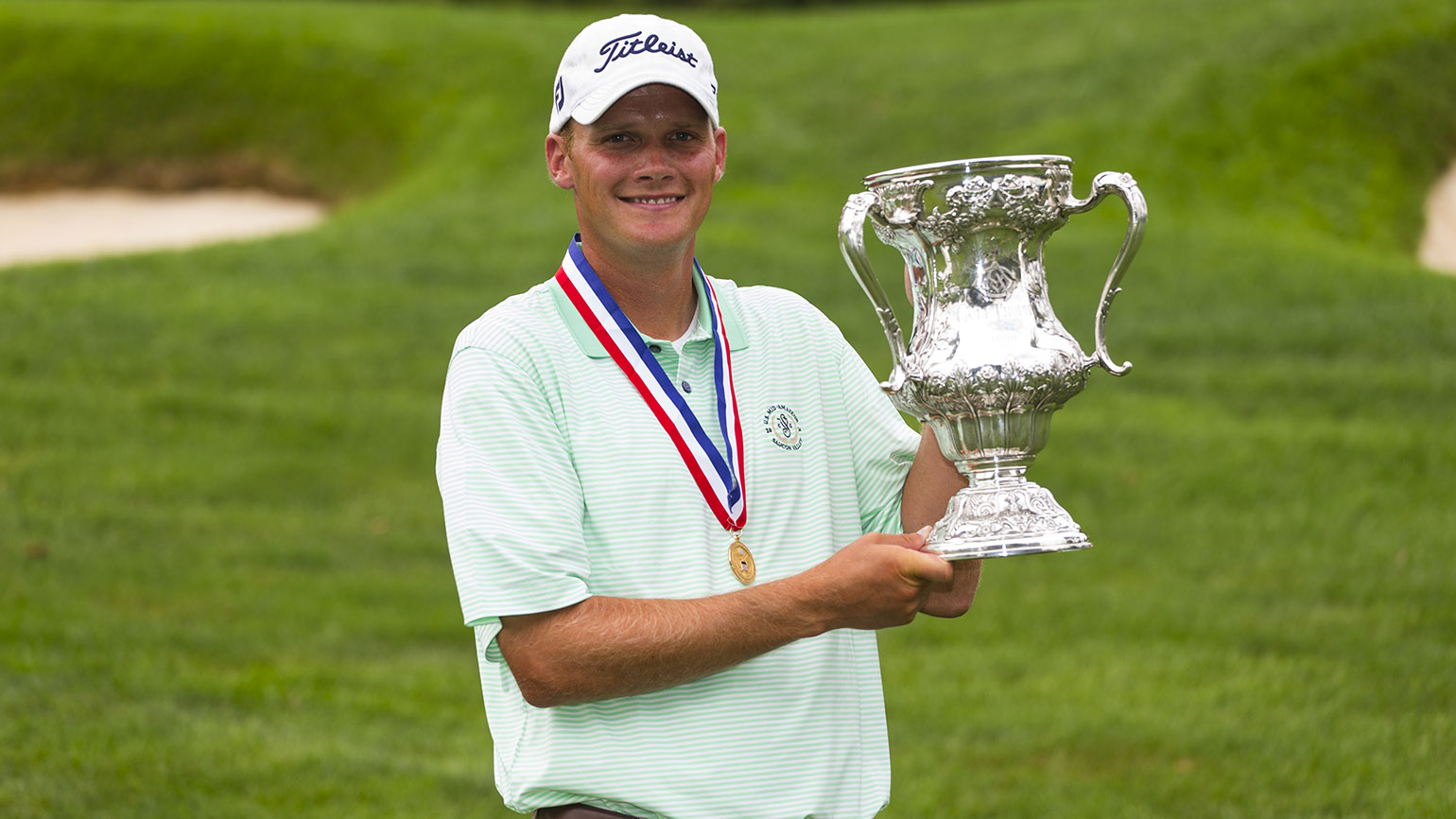
2014 U.S. Mid-Amateur (Scott Harvey)
It’s rare in a match-play format for the top two seeds to wind up in the championship match. The fickle nature of the format creates more possibilities for chaos than for chalk to hold up, especially over the course of six rounds.
But in 2014, co-medalists Scott Harvey and Brad Nurski managed to dodge all the hurdles to reach the 36-hole championship match on the Old Course. Both were reinstated amateurs; each having competed on mini tours before giving up their PGA Tour dreams.
Harvey, a property manager from Greensboro, N.C., defeated 2005 champion Kevin Marsh, 3 and 2, in the semifinals, while lefty Nurski, a conductor and switchman for a railroad company, needed 19 holes to eliminate Tom Werkmeister in the other semifinal.
But in the 36-hole final, it was all Harvey, who was the equivalent of 6 under par (with concessions) over the 31 holes of the match. He defeated the St. Joseph, Mo., native Nurski, 6 and 5, and afterward got emotional. Harvey’s late father, Bill, was a highly decorated amateur who competed in numerous USGA championships and was the reason Scott took up the game.
"He’d say I knew you could do it," said Harvey. "That’s exactly what he’d say."
1951 U.S. Amateur (Billy Maxwell)
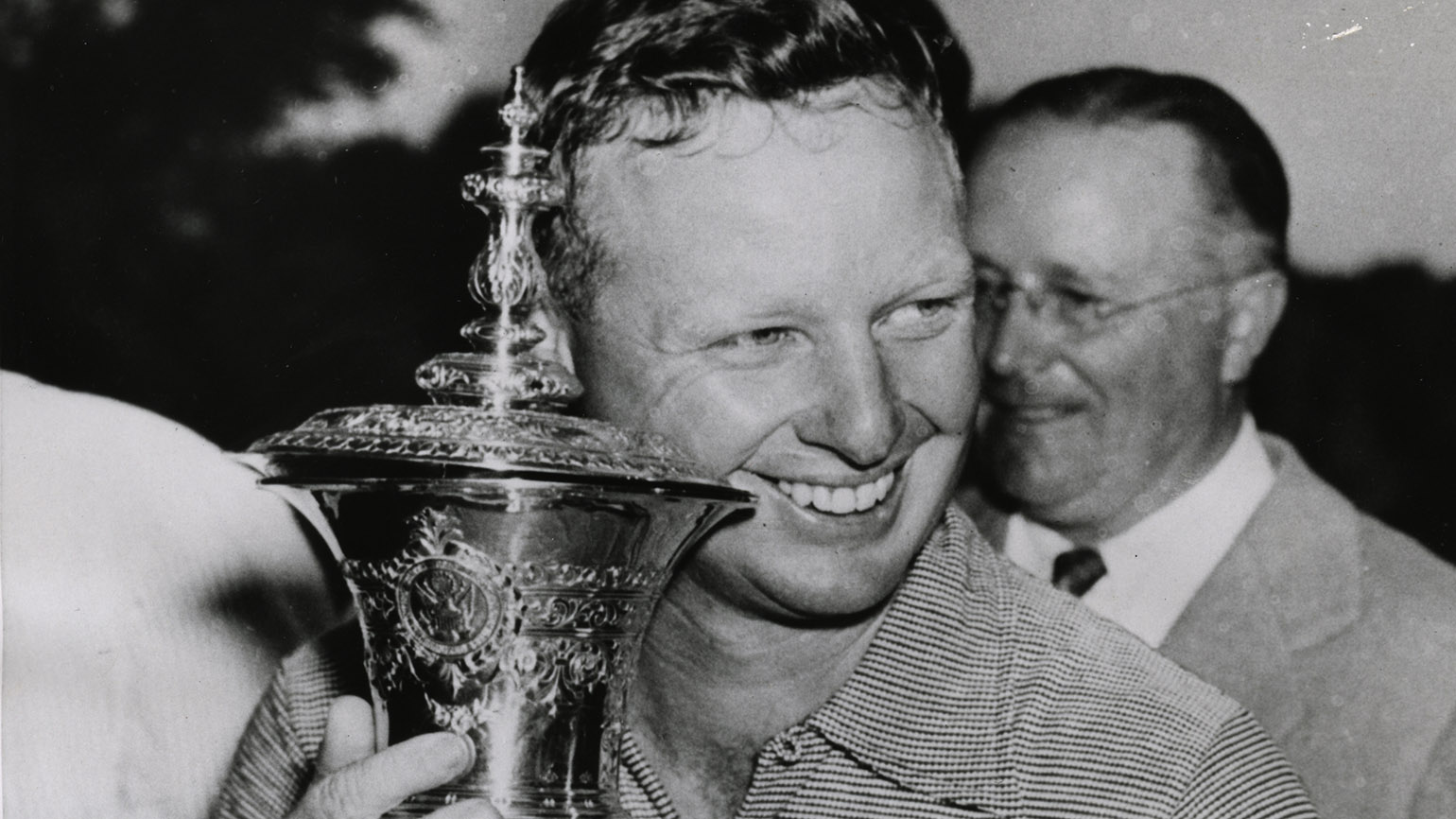
Some 30 years after its founding, Saucon Valley finally got the opportunity to welcome a national championship. Billy Maxwell had been a star player at North Texas State College, where his college teammates included future PGA Tour winner Don January and future British Amateur champion Joe Conrad. Maxwell helped North Texas claim three successive NCAA titles from 1950-52.
A year before besting the field at Saucon Valley, Maxwell had reached the Round of 16 of the U.S. Amateur. At Saucon Valley, he eliminated E. Harvie Ward, who would win consecutive titles in 1955-56, before trouncing J.C. Benson, 10 and 9, in a 36-hole semifinal. Then in the final against future New York State Supreme Court Justice Joseph Gagliardi before 7,000 spectators, Maxwell, then just 22, posted a 4-and-3 victory to become, at the time, the second-youngest player to engrave his name on the Havemeyer Trophy.
“It’s fair to say that Billy had a career that, for the most part, was underappreciated,” said longtime Saucon Valley member Robin McCool, the author of Once Upon a September, the story of the 1951 U.S. Amateur. “He flew under the radar, but he accomplished an awful lot.”
Maxwell passed away in 2021 at the age of 92 in his adopted hometown of Jacksonville, Fla.
1983 U.S. Junior Amateur (Tim Straub)
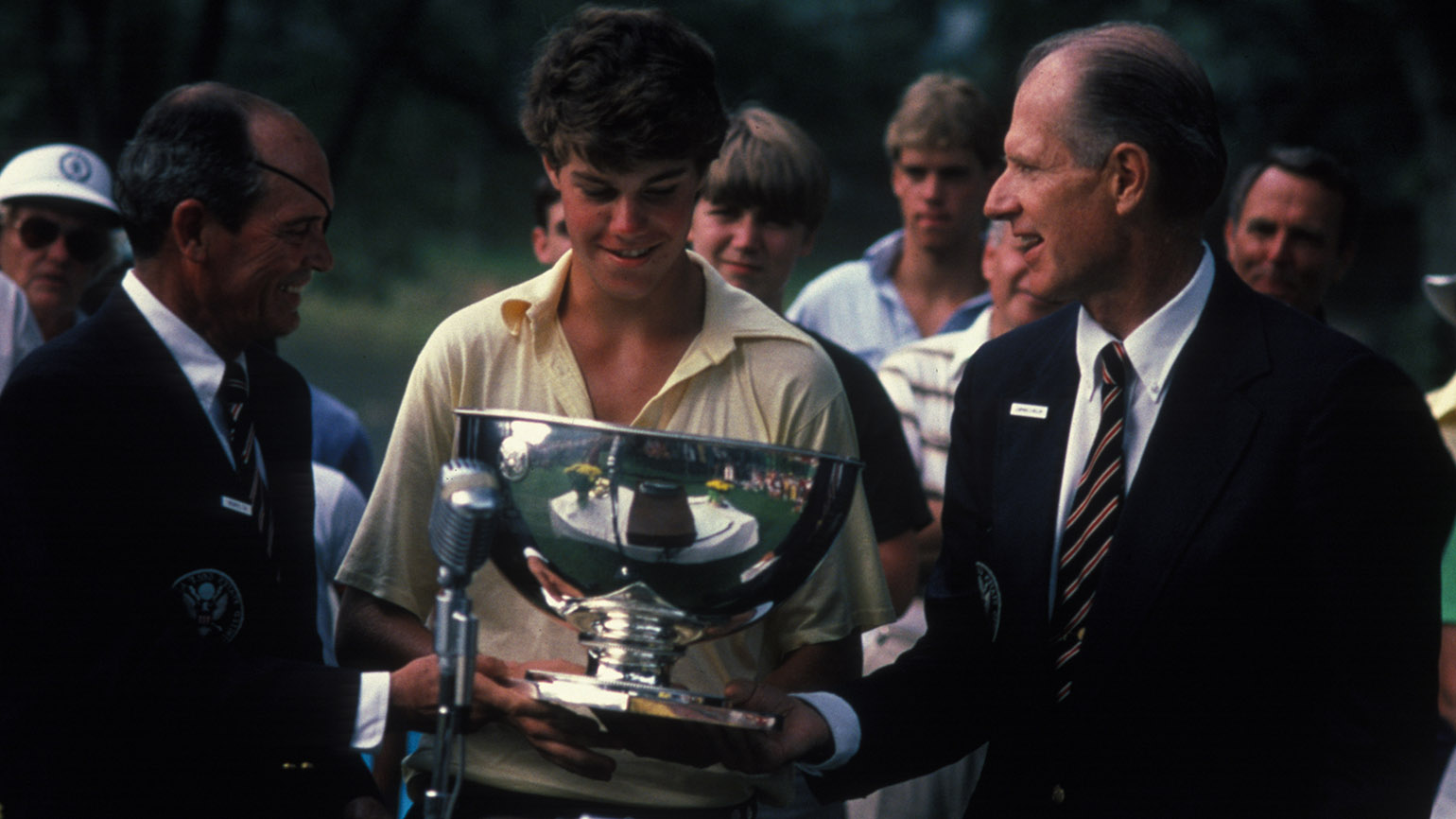
The future Wake Forest standout – and now current Davidson College men’s golf coach – arrived at Saucon Valley with a sour taste after losing in the 1982 final to Rich Marik at Crooked Stick Golf Club, in Carmel, Ind.
The Western New York native had already established himself as one of the country’s top juniors, having captured a pair of New York State Amateur titles.
Straub’s championship match against John Mahon was a tight one. He was 2 up through 16 holes but lost the 17th with a bogey. Straub needed to two-putt from 40 feet on the short par-4 final hole to clinch the win and almost made the long birdie putt.
Straub would earn the Arnold Palmer Scholarship to play collegiately at Wake Forest, where he helped the Demon Deacons to the 1986 NCAA title. He also won a New York State Open.
“It was fun,” Straub told golf writer Reid Spencer in a 2021 article. “I just remember being pretty proud, because I was one of the favorites to win it, and coming through that next year was very rewarding… The USGA always plays great courses, but Saucon Valley is a spectacular golf course – really hard and a lot of fun to play.”
1992 U.S. Senior Open (Larry Laoretti)
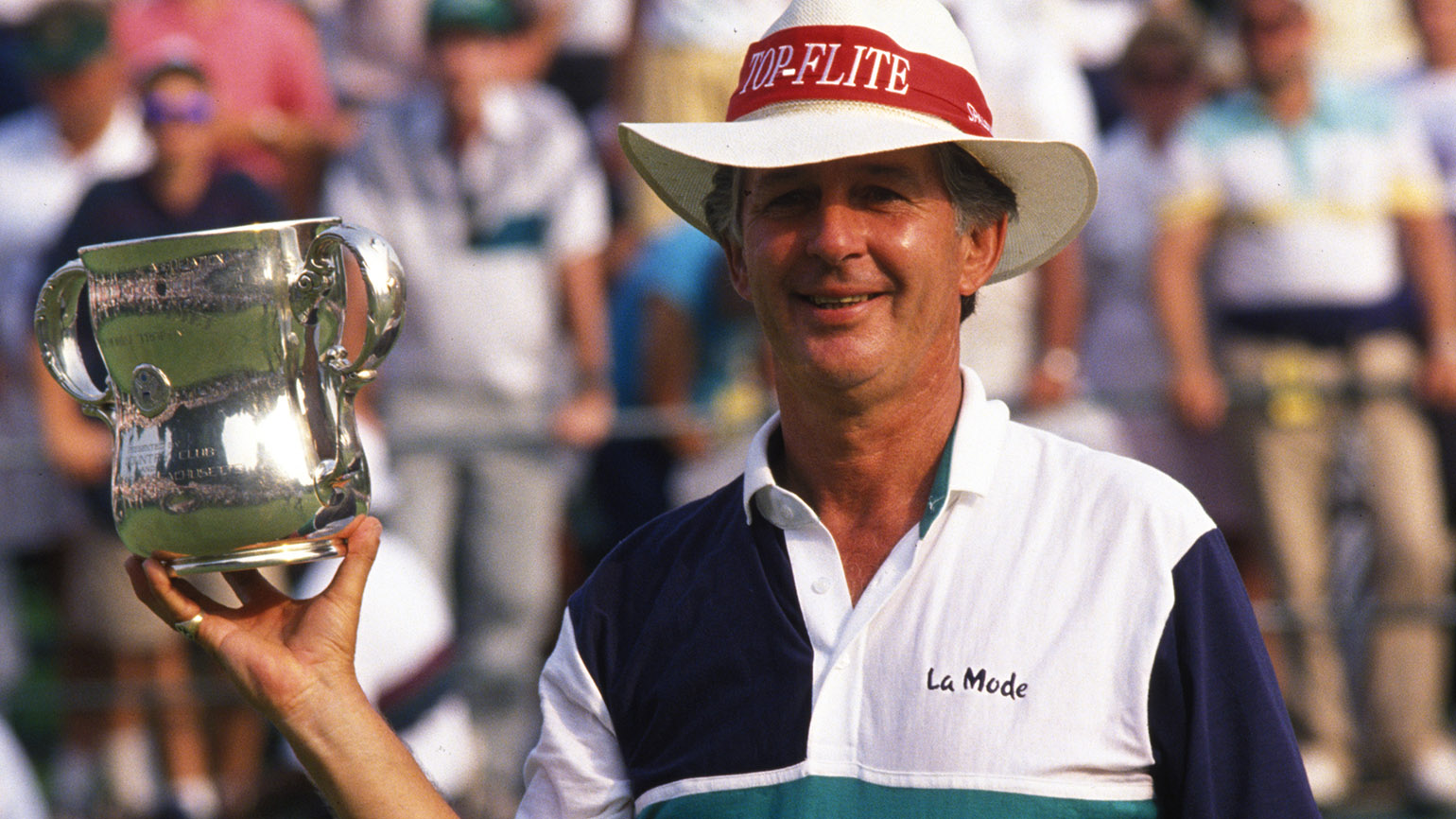
When it comes to characters to have won a USGA title, Larry Laoretti can be placed near the top of the list. The cigar-smoking everyman had been a longtime club professional before joining the 50-and-over circuit. He even celebrated his 53rd birthday in Saturday’s third round.
Sunday would bring the ultimate present; a four-stroke victory over a field that included 18-time major champion Jack Nicklaus, Gary Player, Lee Trevino and Arnold Palmer.
That week, Laoretti, his wife Susan and then 2-year-old son Lonnie stayed in their RV at a nearby campground in Quakertown. Everyone expected Laoretti to fold under the pressure of the championship and the stellar field he was up against. But he shot 67-68 over the weekend to erase any doubt he could handle the cauldron of high-pressure championship golf.
“The biggest memory I have is that I won,” Laoretti told the USGA nearly three decades after his victory. “That’s what it’s all about.”
1987 U.S. Senior Amateur (John Richardson)
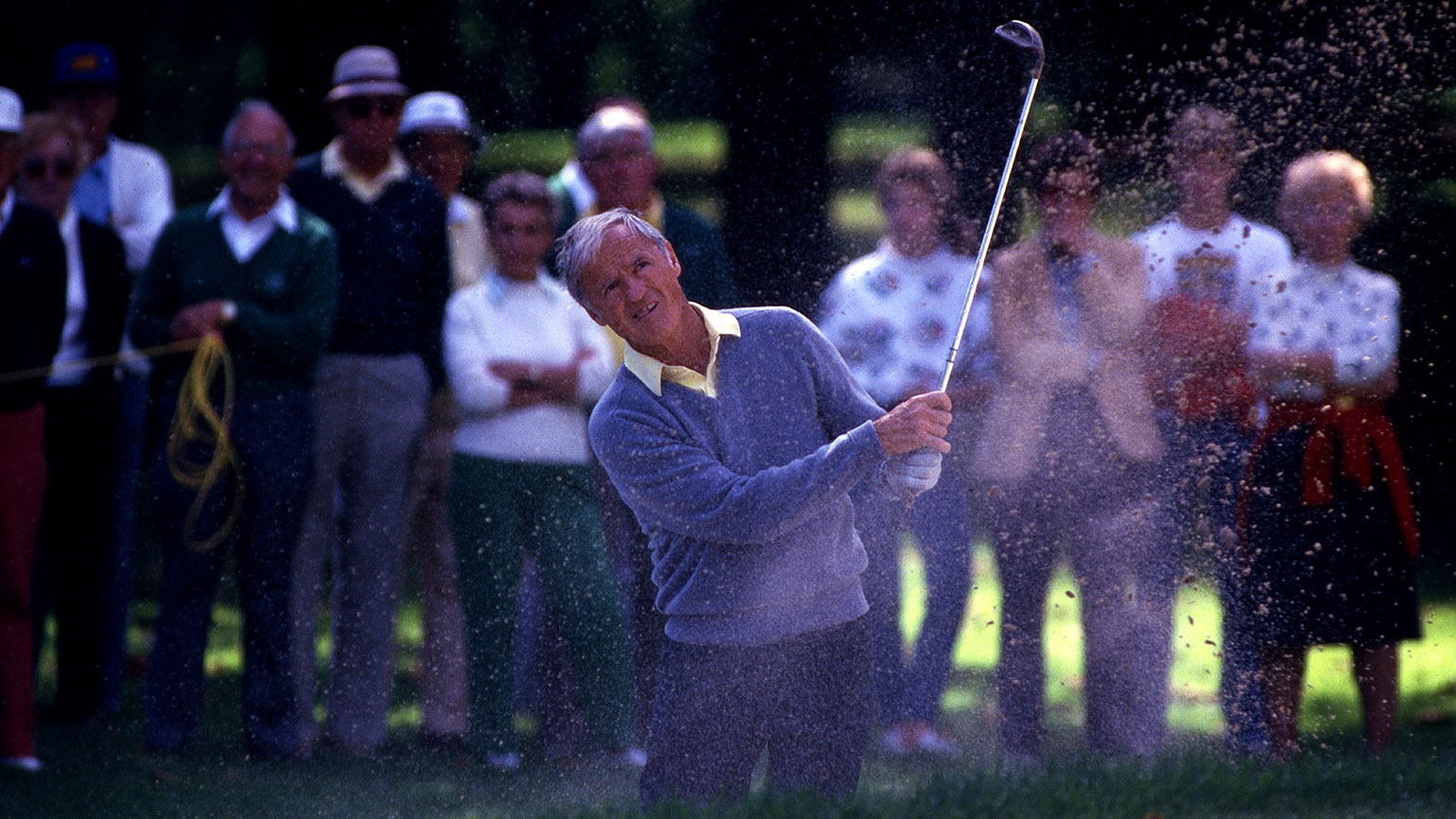
Plenty of father/son tandems have competed in USGA championships, some in the same event, but only one duo has managed to win titles. John Richardson got the feat started with his 1987 U.S. Senior Amateur triumph at Saucon Valley at the age of 66. His son, Kemp, would win a pair of U.S. Senior Amateur titles in 2001 and 2003.
John became the third-oldest champion behind Lewis Oehmig (69 in 1985) and William Hyndman III (67 in 1983). The Laguna Niguel, Calif., resident defeated James Kite, 5 and 4, in the 18-hole championship match.
John enjoyed a decorated amateur career that saw him capture the California Amateur in 1961 and the Southern California Golf Association Amateur 12 years later at the age of 53. Unfortunately, John never saw his son match his feat as a Senior Amateur champion, as he passed away in 1988, just a year after winning his biggest title.
David Shefter is a senior staff writer at the USGA. Email him at dshefter@usga.org
© 2026 United States Golf Association. All Rights Reserved.